

Thousands of student workers at California State University Fullerton face a harsh reality: wage violations happen more often than you’d think. Over 40% of student workers report underpayment and unpaid overtime, leaving many confused about their rights and unsure how to fight back. This guide walks you through the laws that protect you, the budget challenges fueling these disputes, and the steps you can take to recover wages you’ve rightfully earned.
Table of Contents
- Overview Of Student Worker Pay Disputes At CSUF
- California Labor Laws Protecting Student Workers
- CSU Budget Challenges And Their Impact On Student Worker Wages
- Unionization And Collective Bargaining Effects At CSUF
- Recognizing And Documenting Wage Violations At CSUF
- Legal Remedies And How Serendib Law Can Help
- Common Misconceptions About Student Worker Compensation
- Summary And Next Steps For Student Workers With Pay Disputes
- How Serendib Law Supports CSUF Student Workers
- Frequently Asked Questions
Key Takeaways
| Point | Details |
|---|---|
| Widespread wage violations | Over 40% of CSUF student workers experience underpayment, unpaid overtime, and misclassification. |
| Strong legal protections exist | California labor laws, including Assembly Bill 5, protect student workers’ rights to minimum wage and overtime pay. |
| CSU budget cuts impact pay | State funding reductions in 2025 led CSU to withhold contractual step raises for over 1,100 workers. |
| Union advocacy improves outcomes | Collective bargaining through unions like CSUEU has secured wage increases and strengthened enforcement. |
| Documentation is critical | Keeping detailed work logs and pay stubs strengthens your legal claims and improves recovery chances. |
Overview of Student Worker Pay Disputes at CSUF
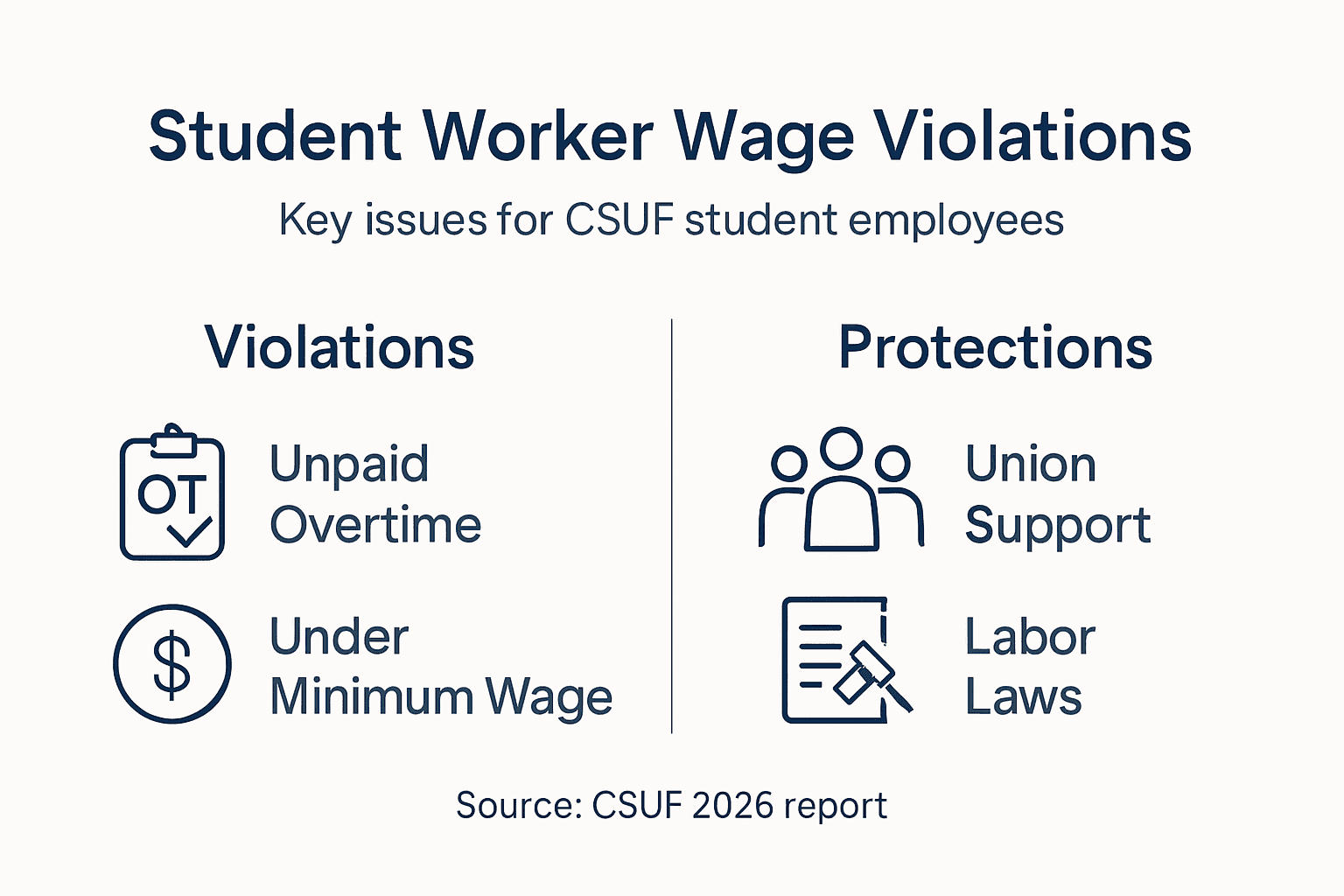
Wage disputes among student workers at CSUF aren’t isolated incidents. They’re a systemic problem affecting hundreds of students every year. Over 40% of student workers report wage violations including underpayment and unpaid overtime, creating financial stress during an already challenging time. These issues stem from various causes, including budget constraints, administrative errors, and intentional wage suppression.
Common disputes include unpaid overtime, underpayment below minimum wage, and employee misclassification. Misclassification occurs when employers label workers as independent contractors rather than employees, denying them overtime protections and benefits. Recent CSU budget cuts have worsened the situation, leading to delayed payments and withheld raises that violate existing contracts.
Pay stub transparency remains a significant challenge. Many student workers receive pay stubs with incomplete information, making it difficult to verify hours worked or identify discrepancies. This lack of clarity allows wage violations to continue undetected.
Key dispute types at CSUF include:
- Unpaid overtime for hours exceeding 8 per day or 40 per week
- Wages below California’s minimum wage rate
- Withheld contractual step raises despite union agreements
- Misclassification as independent contractors to avoid wage protections
- Delayed or missing paychecks without valid justification
Understanding student worker wage rights at CSUF is your first step toward fair compensation. The patterns seen at CSUF mirror wage violations faced by interns in Fullerton, suggesting broader systemic issues in student employment across the region.
California Labor Laws Protecting Student Workers
You have robust legal protections, regardless of your student status. California labor laws apply equally to student workers, part-time employees, and full-time staff. The idea that student employment carries fewer rights is simply false.
Assembly Bill 5 protects against employee misclassification and extends wage and hour protections to most workers, including students. This legislation created strict standards for classifying workers as independent contractors. Under AB 5, most student workers must be classified as employees entitled to minimum wage, overtime pay, and other protections.
California’s minimum wage applies to you. Employers cannot pay less simply because you’re a student. In 2026, California’s minimum wage remains a floor below which no employer can legally go. Overtime rules also apply: you’re entitled to time and a half for hours exceeding 8 in a workday or 40 in a workweek.
The California Labor Commissioner enforces these protections and handles wage claims. If your employer violates wage laws, you can file a complaint with the Labor Commissioner’s office without hiring an attorney. The process is designed to be accessible and doesn’t require legal representation, though having a lawyer can improve your outcome.
Key legal protections for student workers include:
- Right to minimum wage for all hours worked
- Overtime pay at 1.5 times regular rate for eligible hours
- Protection against misclassification as independent contractors
- Right to accurate, itemized pay stubs
- Protection from retaliation for asserting wage rights
Pro Tip: Screenshot or photograph your work schedule and clock-in times weekly. Digital records disappear, and having your own copies strengthens any future wage claim.
Worker misclassification laws protect you from employers trying to dodge overtime obligations. If you’re unsure whether you’re properly classified, compare your situation to examples of wage and hour violations in similar industries to spot red flags.
CSU Budget Challenges and Their Impact on Student Worker Wages
Budget problems at the state level have directly affected your paycheck. In 2025, California cut CSU’s state funding, creating a financial crisis that administrators claimed justified withholding contractual wage increases. The $144 million state funding cut in 2025 causing withheld step raises hit student workers and staff members hard.
CSU’s response was controversial. Instead of reducing expenses elsewhere, administrators failed to pay contractual step raises to Teamsters Local 2010 workers in 2025, affecting over 1,100 employees. These step raises were negotiated in good faith and written into binding agreements. Withholding them potentially violates both contract law and labor statutes.
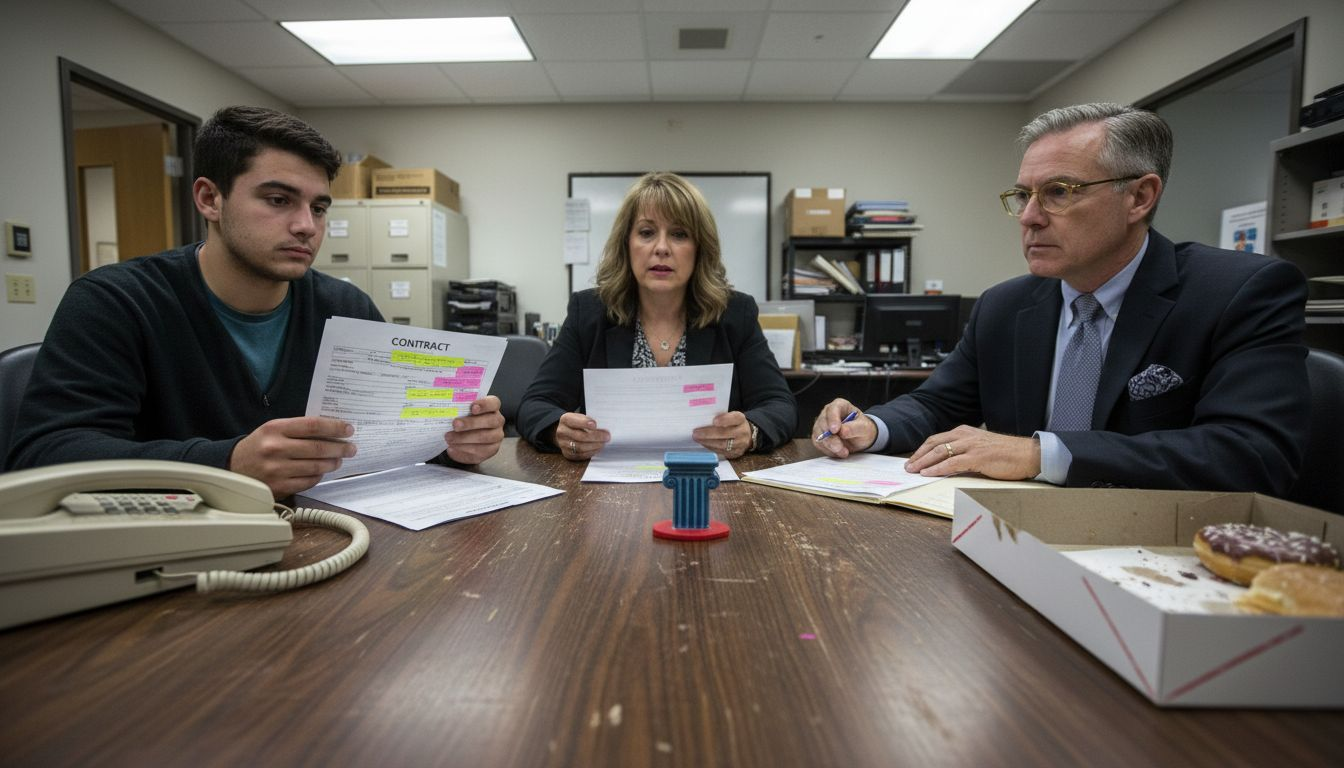
Unions argued that budget constraints don’t override legal obligations to pay agreed wages. CSU claimed financial force majeure, but labor attorneys countered that proper budgeting should account for contractual obligations before committing to new expenses. The dispute highlighted a fundamental question: can public employers simply refuse to honor wage agreements when budgets tighten?
Student workers felt the impact directly. Step raises that would have increased hourly rates by 5 to 10 percent simply didn’t materialize. For students relying on work income to cover rent and tuition, this wasn’t just an inconvenience but a genuine financial hardship.
| Budget Impact | Effect on Workers | Timeline |
|---|---|---|
| State funding cut | $144 million reduction | 2025 fiscal year |
| Withheld step raises | Over 1,100 workers affected | July 2025 onward |
| Union negotiations | Strikes and collective action | Fall 2025 |
| Tentative agreements | 5% general increase secured | Early 2026 |
Pro Tip: If your raise was contractually promised but withheld, document the original agreement and all communications about the delay. Budget problems don’t erase legal obligations.
Understanding the CSU budget impact on wages helps you recognize when financial constraints become illegal wage theft. If you believe CSU owes you wages, learning about filing claims against public entities is essential because public employers face different procedural requirements than private companies.
Unionization and Collective Bargaining Effects at CSUF
Unions have transformed student worker wages at CSU campuses. Starting in 2024, student assistants gained formal union representation through CSUEU, giving thousands of workers collective bargaining power they previously lacked. Union membership means you’re no longer negotiating alone against a massive university system.
Collective bargaining produces concrete results. CSU faculty and staff secured a 5% general salary increase plus step increases despite the budget disputes and initial resistance from administrators. These gains came through persistent negotiation, strike threats, and actual work stoppages that demonstrated workers’ leverage.
Recent strikes proved particularly effective. When CSU withheld contractual raises in 2025, union members walked out, disrupting campus operations and drawing public attention to wage violations. The strikes pressured CSU to return to the bargaining table and eventually agree to retroactive payments.
Union involvement in wage disputes provides several advantages:
- Professional negotiators advocate on your behalf
- Legal resources and expertise become available to all members
- Collective action creates leverage individual workers lack
- Union contracts establish clear wage scales and raise schedules
- Grievance procedures provide formal dispute resolution processes
Membership strengthens individual wage claims because union attorneys can intervene directly with university administrators. When disputes escalate to litigation or arbitration, union representation significantly improves settlement outcomes. Even if you ultimately work with a private attorney, union involvement at CSUF provides initial support and documentation.
Union arbitration processes offer alternatives to court litigation, often resolving disputes faster and with less formality. Understanding how collective bargaining works empowers you to make informed decisions about joining and participating in union activities.
Recognizing and Documenting Wage Violations at CSUF
You can’t fight what you can’t prove. Recognizing wage violations early and documenting them meticulously makes the difference between recovering unpaid wages and watching your claim fail. Start by tracking every shift you work, noting start times, end times, and breaks.
Compare your pay stubs to your actual hours worked. Discrepancies between what you logged and what you were paid signal potential violations. Look for missing overtime hours, incorrect hourly rates, or unexplained deductions. Many wage theft cases involve small amounts per pay period that add up to thousands of dollars over months.
Identify red flags indicating wage violations:
- Regularly working over 8 hours daily without overtime pay
- Paychecks arriving late or inconsistently
- Pressure to work off the clock before or after shifts
- Pay stubs missing required information like hourly rate or hours worked
- Verbal promises of raises that never materialize in writing
- Classification as independent contractor despite following employer’s schedule and supervision
Keep copies of everything related to your employment. Save all pay stubs, work schedules, email communications about hours or wages, and any written employment agreements. Store digital copies in cloud storage separate from university systems, ensuring access even if you leave CSUF.
Pro Tip: Create a simple spreadsheet logging each shift’s date, start time, end time, and total hours. Update it weekly while details are fresh, and compare it to your pay stub when paychecks arrive.
Keeping detailed logs and documentation is essential for successful wage claims, as demonstrated in similar employment cases. Understanding the importance of documentation in wage claims prevents claims from failing due to insufficient evidence. Take time to learn about recognizing wage violations at CSUF so you can spot problems before they escalate.
Legal Remedies and How Serendib Law Can Help
You have multiple paths to recover unpaid wages. The most common route involves filing a wage claim with the California Labor Commissioner, a process designed to be accessible without an attorney. The Labor Commissioner investigates claims, holds hearings, and can order employers to pay owed wages plus penalties.
Negotiation often resolves disputes faster than formal proceedings. Many employers prefer settling rather than facing public hearings or litigation. Your attorney can negotiate on your behalf, leveraging the threat of formal action to secure fair settlements that include unpaid wages, interest, and sometimes penalties.
Litigation becomes necessary when employers refuse reasonable settlements. In court, you can seek not only unpaid wages but also waiting time penalties, statutory damages, and attorney’s fees. California’s wage laws strongly favor employees, making litigation a viable option when other approaches fail.
Union involvement can complement legal action. If you’re a union member, coordinate with your union representative before filing individual claims. Union resources might handle your case through grievance procedures, or union attorneys might represent you in formal proceedings.
Serendib Law offers free consultations specifically tailored to student workers facing pay disputes. Early legal advice prevents common mistakes that weaken claims, such as missing filing deadlines or accepting inadequate settlement offers. Experienced employment law attorneys at Serendib Law understand the unique challenges CSUF student workers face and can guide you through every step.
Legal remedies available to you include:
- Filing wage claims with California Labor Commissioner
- Negotiating settlements for unpaid wages and penalties
- Pursuing litigation for systematic wage violations
- Seeking class action certification for widespread violations
- Using arbitration when employment agreements require it
The arbitration process with Serendib Law provides an alternative dispute resolution method that can be faster and less formal than court proceedings. If you’re considering joining a union for support, combining union representation with private legal counsel often produces the best results.
Common Misconceptions About Student Worker Compensation
Myths about student worker rights prevent many from asserting legitimate wage claims. Understanding what’s false helps you recognize when employers are violating your rights rather than exercising legitimate authority.
Myth: Student workers aren’t entitled to overtime pay. False. California labor laws, including Assembly Bill 5, extend full wage protections to student workers. If you work over 8 hours in a day or 40 hours in a week, you’re legally entitled to overtime at one and a half times your regular rate. Your student status doesn’t change this.
Myth: Employers can pay students less than minimum wage. False. California’s minimum wage applies to all workers regardless of age or student status. Any payment below the legal minimum wage is illegal, with limited exceptions that rarely apply to university student workers.
Myth: Budget cuts justify withholding promised raises. Usually false. When raises are part of negotiated contracts or established pay scales, employers generally cannot withhold them due to budget problems. Financial difficulties don’t override contractual obligations unless specific force majeure clauses explicitly allow it.
Myth: You’ll lose your job if you file a wage claim. Illegal. California law prohibits retaliation against workers who assert their wage rights. Employers cannot fire, demote, or otherwise punish you for filing complaints with the Labor Commissioner or reporting wage violations. If retaliation occurs, you have additional legal claims.
Common misconceptions that hurt student workers:
- Believing work-study positions don’t require overtime pay
- Assuming informal cash payments are legal
- Thinking you must accept whatever wage your supervisor offers
- Believing you need a lawyer to file basic wage claims
- Assuming small wage violations aren’t worth pursuing
Clarifying student worker wage misconceptions empowers you to take appropriate action when violations occur. Don’t let false beliefs prevent you from recovering wages you’ve earned.
Summary and Next Steps for Student Workers with Pay Disputes
You now understand your rights under California labor law and the systemic factors contributing to wage disputes at CSUF. Knowledge alone won’t recover unpaid wages, but it’s the foundation for effective action. Your next steps determine whether violations continue or whether you receive fair compensation.
Start by documenting everything related to your employment. Create detailed logs of hours worked, save all pay stubs, and preserve communications about wages and schedules. Strong documentation transforms weak claims into winning cases.
Engage with your union if you’re a member. Union representatives can provide immediate support, explain grievance procedures, and coordinate collective action that benefits all affected workers. Union involvement often accelerates resolution.
Consult legal professionals early in the dispute process. Attorneys experienced in employment law can evaluate your claim’s strength, explain available remedies, and prevent procedural mistakes that weaken your case. Many employment attorneys, including Serendib Law, offer free initial consultations.
Take action promptly because wage claims have statute of limitations deadlines:
- Document your hours and compare them to pay stubs immediately
- Contact your union representative if you’re a member
- Consult an employment attorney for case evaluation
- File wage claims with the Labor Commissioner if informal resolution fails
- Consider collective action if multiple workers face similar violations
Understanding next steps for wage dispute resolution helps you move from awareness to action, transforming knowledge into recovered wages.
How Serendib Law Supports CSUF Student Workers
Navigating wage disputes while managing coursework and financial stress feels overwhelming. Serendib Law specializes in employment disputes affecting student workers, offering experienced representation tailored to the unique challenges you face at CSUF. We understand both California labor law and the specific dynamics of university employment.
Our firm offers free consultations to evaluate your wage dispute case. During this consultation, we’ll review your documentation, explain your legal options, and outline realistic outcomes based on similar cases we’ve handled. There’s no obligation, and the consultation helps you make informed decisions about how to proceed.
Our experienced employment law attorneys in Lake Forest guide you through every stage of the process, from initial claim filing through negotiations, hearings, and litigation if necessary. We handle the legal complexity so you can focus on your education while we fight for the compensation you’ve earned. Our employment law attorneys in Huntington Beach also serve the broader Orange County community with the same dedication.
Accessible legal support makes the difference between accepting wage theft and recovering what you’re owed. Contact Serendib Law today to discuss your CSUF student worker pay dispute and learn how we can help you achieve fair compensation.
Frequently Asked Questions
Are CSUF student workers entitled to overtime pay?
Yes, absolutely. California labor law, including Assembly Bill 5, requires overtime pay for student workers who work more than 8 hours in a day or 40 hours in a week. Your student status doesn’t exempt you from overtime protections. You must receive one and a half times your regular hourly rate for eligible overtime hours.
How do I file a wage claim with the California Labor Commissioner?
Visit the California Labor Commissioner’s website and complete the Initial Report or Claim form. You’ll need documentation of hours worked, pay stubs, and any employment agreements. The process is free and doesn’t require an attorney, though legal representation often improves outcomes. After filing, the Labor Commissioner investigates and schedules a hearing if necessary.
What role do unions play in protecting student worker wages at CSUF?
Unions like CSUEU negotiate wage contracts, defend against violations, and provide legal resources to members. They conduct collective bargaining to secure raises and improved working conditions. When violations occur, unions can file grievances, coordinate strikes, and represent workers in disputes. Union membership gives you access to professional advocates and strengthens your position against university administrators.
What steps should I take to document a pay dispute effectively?
Create a detailed log recording each shift’s date, start time, end time, and total hours worked. Save all pay stubs, work schedules, and employment communications. Take photos or screenshots of time clocks and digital records. Compare your logs to pay stubs every pay period to spot discrepancies immediately. Store copies in multiple locations, including cloud storage separate from university systems.
Can CSU withhold promised raises due to budget cuts?
Generally no. When raises are part of negotiated union contracts or established employment agreements, CSU cannot withhold them simply because of budget constraints. Contractual obligations remain binding unless specific force majeure clauses explicitly allow suspension. The 2025 CSU budget disputes demonstrated that withholding contractual raises likely violates labor law, leading to union strikes and eventual settlements requiring payment.
Will I face retaliation if I file a wage claim against CSUF?
Retaliation for asserting wage rights is illegal under California law. Employers cannot fire, demote, reduce hours, or otherwise punish you for filing wage claims or reporting violations. If retaliation occurs, you have additional legal claims for damages. Document any adverse actions following your wage claim, as this evidence strengthens retaliation claims and can result in significant additional compensation.
Recommended
- Student Worker Wage Violations at CSUF – Protecting Your Rights | Serendib Law Firm
- Intern Wage Violations in Fullerton – What Students Face | Serendib Law Firm
- Salary Negotiation: Get What You’re Worth | We Are Over The Moon
- Understanding OSHA: Your Guide for Safe Work Environments – WorkWearComfort