
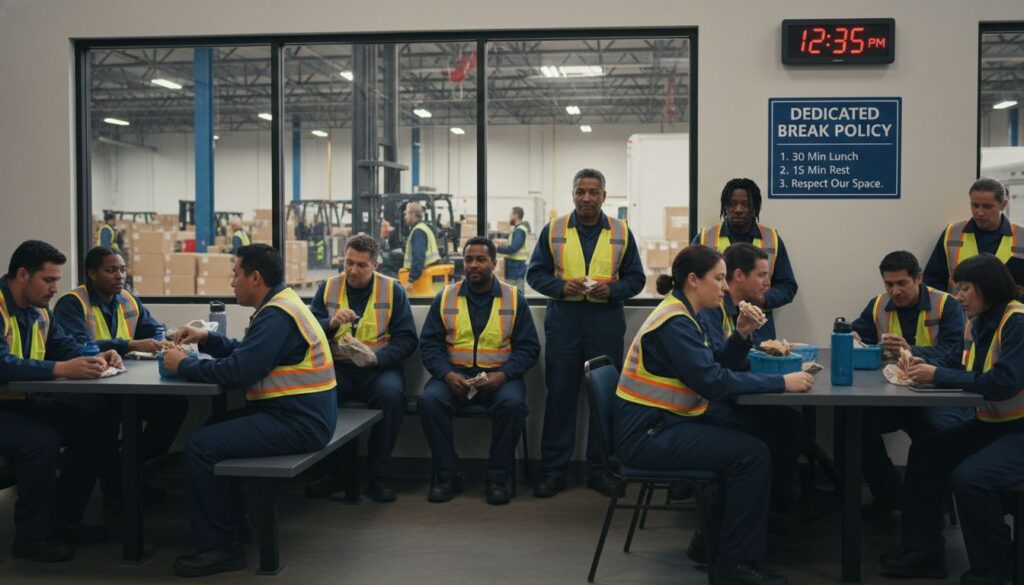
Missing a single meal or rest break may not sound serious, but in California logistics, it can cost employers an extra hour of pay for each violation. Strong break laws protect workers’ health and stamina, especially in jobs filled with heavy lifting and tight deadlines. This guide clarifies how complex federal, state, and local break rules shape daily routines for logistics companies and employees in Fountain Valley, highlighting critical protections and the real risks of non-compliance.
Table of Contents
- Defining Meal And Rest Breaks In Logistics
- California Labor Laws For Meal And Rest Breaks
- Local Regulations Affecting Fountain Valley Employers
- Employer Responsibilities And Compliance Strategies
- Employee Rights, Remedies, And Legal Actions
Key Takeaways
| Point | Details |
|---|---|
| Meal and Rest Breaks | Break regulations vary by state, with many states, including California, enforcing strict requirements for meal and rest breaks in logistics. |
| California’s Specific Requirements | CA mandates a 30-minute unpaid meal break for overtime shifts, and a 10-minute paid rest break for every four hours worked. |
| Employer Compliance | Logistics companies must develop clear break policies and implement tracking systems to ensure compliance with local labor laws. |
| Employee Rights | Workers in California can pursue legal action for denied breaks, which may result in financial compensation for violations. |
Defining Meal And Rest Breaks In Logistics
Meal and rest breaks are critical workplace protections that ensure workers in logistics and transportation maintain their health, safety, and productivity. According to Department of Labor, federal regulations do not universally mandate meal or rest breaks for employees, creating a complex landscape of worker protections that varies significantly by state and industry.
Meal Breaks in logistics typically represent an unpaid period where workers are completely relieved of job duties, allowing time for eating and personal activities. The standard meal break ranges from 30 to 45 minutes, during which employees are not considered working. FindLaw highlights that while federal law doesn’t require these breaks, many states have specific mandates, particularly for industries involving physical labor like logistics.
Rest Breaks, in contrast, are shorter periods (usually 10-15 minutes) that are considered compensable work time. These breaks are essential for logistics workers who frequently engage in physically demanding tasks like loading, unloading, and warehouse operations. Key characteristics of rest breaks include:
- Paid time off lasting between 5-20 minutes
- Designed to help workers maintain concentration and prevent fatigue
- Often strategically scheduled during long shifts to maintain worker safety
- Legally recognized as part of compensable work hours
Logistics companies must carefully navigate these complex regulations, understanding that break requirements can differ dramatically based on state law, specific job roles, and total hours worked. While federal guidelines provide a baseline, workers in Fountain Valley and throughout California benefit from some of the most robust break protection laws in the United States.
California Labor Laws For Meal And Rest Breaks
California stands out with some of the most comprehensive meal and rest break protections in the United States, particularly for logistics workers. California Department of Industrial Relations mandates specific requirements that go far beyond federal guidelines, ensuring worker protection and fair compensation in demanding industries like transportation and logistics.
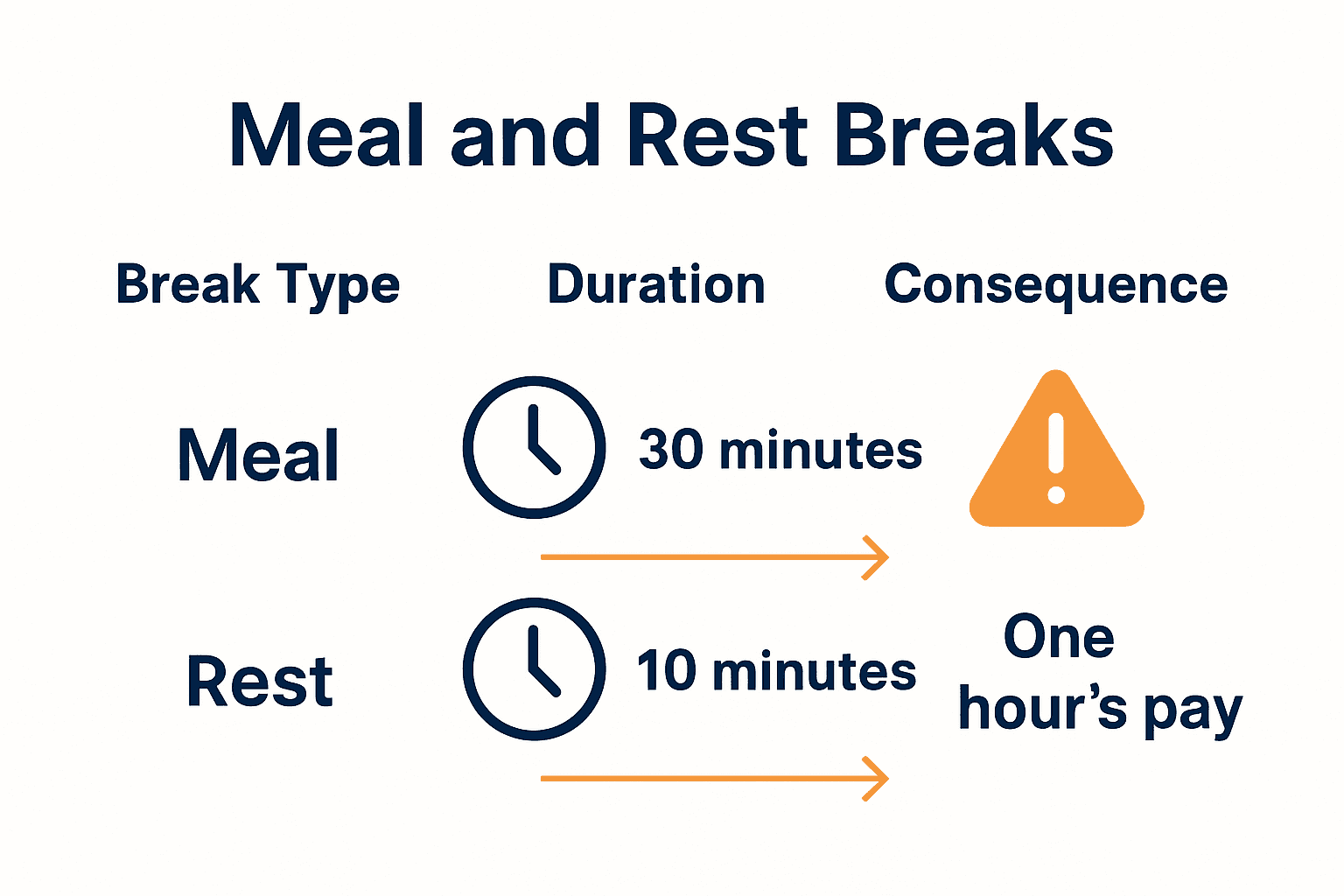
Meal Break Requirements are particularly strict in California. Employers must provide a 30-minute unpaid meal period for employees working more than five hours, with a second meal period required for those working over ten hours. These breaks must be uninterrupted and provide workers complete freedom from work duties. Notably, in the landmark case of Dilts v. Penske Logistics, the court affirmed that these labor laws apply comprehensively across transportation and logistics sectors.
Key provisions of California’s meal and rest break laws include:
- 30-minute unpaid meal break for shifts exceeding 5 hours
- Second 30-minute meal break for shifts longer than 10 hours
- 10-minute paid rest break for every 4 hours worked
- Employers must pay an additional hour of wages if breaks are not provided
- Breaks must be duty-free and uninterrupted
For logistics companies in Fountain Valley and across California, compliance is not optional. Failing to provide mandated breaks can result in significant financial penalties, including paying workers an additional hour of wages for each missed break. The law is designed to protect worker health, prevent fatigue, and ensure fair compensation in physically demanding industries.
Local Regulations Affecting Fountain Valley Employers
Fountain Valley employers face a complex landscape of labor regulations that demand strict adherence to meal and rest break requirements. MyShyft highlights that California’s stringent labor laws significantly impact local businesses, creating substantial challenges for logistics and transportation companies in maintaining compliance.
Workplace Scheduling Regulations in Fountain Valley go beyond simple break time mandates. Employers must carefully design work schedules that not only meet legal requirements but also protect worker rights and maintain operational efficiency. As California State University, Fullerton emphasizes, these regulations require proactive management and systematic approach to break scheduling.
Key local regulatory considerations for Fountain Valley employers include:
- Mandatory documentation of break times and schedules
- Strict penalties for non-compliance with meal and rest break laws
- Required training for managers on labor law requirements
- Potential legal consequences for systematic break violations
- Mandatory compensation for missed or interrupted breaks
For Experienced Fountain Valley Employment Law Attorneys, navigating these complex regulations requires deep understanding of local and state labor laws. Employers must implement robust systems that track and verify break compliance, protecting both worker rights and business interests in this highly regulated environment.
Employer Responsibilities And Compliance Strategies
Logistics employers in Fountain Valley face complex obligations when implementing meal and rest break policies. Employment Law Handbook emphasizes that while federal regulations may not mandate breaks, employers must carefully design policies that protect worker rights and maintain legal compliance.
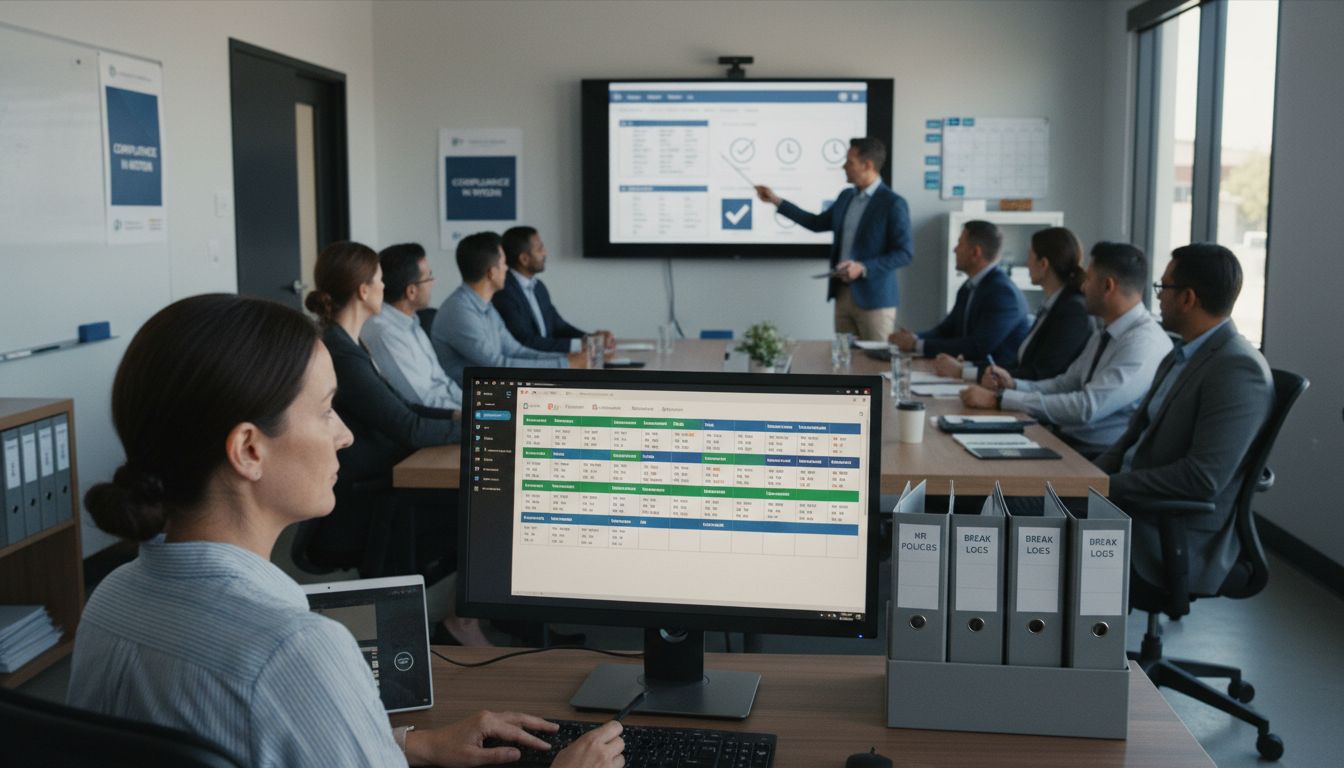
Comprehensive Break Policy Development requires a multi-faceted approach. Employers must create clear, written guidelines that outline exact break schedules, compensation rules, and employee expectations. This involves developing systematic tracking mechanisms, training management teams, and establishing transparent communication channels about break entitlements.
Key compliance strategies for logistics employers include:
- Implementing robust digital tracking systems for break times
- Conducting regular training sessions on labor law requirements
- Maintaining meticulous documentation of break schedules
- Creating clear escalation procedures for break violations
- Developing transparent compensation mechanisms for missed breaks
For Experienced Orange Employment Law Attorneys, navigating these complex regulatory landscapes requires proactive legal strategies. Logistics companies must view break compliance not just as a legal obligation, but as a critical component of maintaining a healthy, productive workplace environment that respects worker rights and minimizes potential legal risks.
Employee Rights, Remedies, And Legal Actions
Logistics workers in Fountain Valley have specific legal protections regarding meal and rest breaks that extend far beyond federal minimums. TimeTrex highlights that while federal regulations may be minimal, state laws provide comprehensive worker protections, particularly in California where break rights are rigorously defined and enforced.
Legal Remedies for Break Violations offer multiple avenues for employees seeking compensation. Wikipedia confirms that in states like California, employees denied mandated breaks can pursue legal action, potentially recovering significant financial damages. These remedies typically include additional hourly wages for each missed break, potential penalties against the employer, and compensation for related workplace stress or productivity loss.
Key employee rights and potential legal actions include:
- Right to file formal complaints with state labor boards
- Potential recovery of one hour’s wages for each missed break
- Protection from employer retaliation when asserting break rights
- Ability to pursue individual or class action lawsuits
- Statute of limitations for filing break violation claims
For Employee Rights Protection, workers must document break violations meticulously. Logistics employees should maintain detailed records of missed breaks, communicate concerns internally, and seek legal counsel if employers consistently fail to comply with California’s stringent labor regulations. Understanding these rights transforms break violations from potential workplace frustrations into actionable legal claims.
Protect Your Rights in Meal and Rest Break Enforcement for Fountain Valley Logistics Workers
If you are working in logistics in Fountain Valley and face challenges with meal and rest break compliance, you are not alone. Missing legally mandated breaks can lead to fatigue, safety risks, and lost wages. California law requires employers to provide uninterrupted, duty-free breaks with proper compensation or face penalties. Understanding your rights and holding employers accountable is critical to safeguarding your health and livelihood.
Our experienced team at Serendib Law Firm is ready to help you navigate complex labor laws. Explore our Meal and Rest Breaks Archives | Serendib Law Firm for important insights on your protections. If you suspect wage violations, visit Wage Violations Archives | Serendib Law Firm for more support. Do not wait until break violations impact your health and paycheck. Contact us today at Serendib Law Firm for a free consultation and assert your rights now.
Frequently Asked Questions
What are the meal break requirements for logistics workers in Fountain Valley?
Employers in Fountain Valley must provide a 30-minute unpaid meal break for workers who work more than five hours, and a second meal break for those working over ten hours.
How long are rest breaks for logistics employees?
Rest breaks typically last between 10 to 15 minutes and are considered compensable work time, aiming to help workers maintain concentration and prevent fatigue.
What happens if an employer fails to provide the required breaks?
If breaks are not provided, employers must compensate the affected employee with an additional hour of wages for each missed break, as mandated by California law.
Can logistics workers file legal claims for break violations?
Yes, logistics workers can file formal complaints or pursue legal action for missed breaks, potentially recovering damages such as additional wages and protections against employer retaliation.