
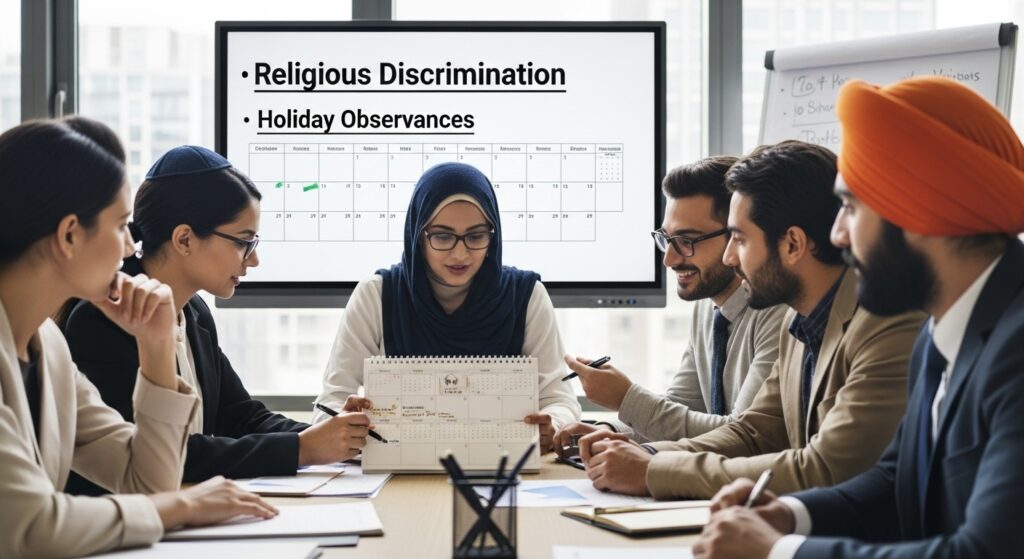
Workplace discrimination based on religion is becoming a bigger issue than many realize. Thousands of religious discrimination claims are filed every year with the EEOC which should make any employee or business owner pause. Most people think these cases only target big, obvious acts. Turns out, even subtle biases and small accommodations can spark major lawsuits and completely shift company culture.
Table of Contents
- Defining Religious Discrimination In The Workplace
- The Importance Of Religious Accommodation Laws
- Scheduling Conflicts: Balancing Work And Religious Practices
- Case Studies: Real-World Examples Of Lawsuits
- Steps To Take When Facing Discrimination
Quick Summary
| Takeaway | Explanation |
|---|---|
| Understand your rights against discrimination | Employees can challenge unfair treatment based on their religious beliefs, as federal laws protect these rights. |
| Request reasonable accommodations for your religion | Employers must provide adjustments for religious practices unless they can prove undue hardship. |
| Document incidents of discrimination carefully | Keeping detailed records of discriminatory events strengthens your case if you pursue legal action. |
| Exhaust internal remedies before legal action | Report incidents to HR and follow grievance procedures before filing external complaints or lawsuits. |
| Consult with legal experts if needed | If internal processes fail, seeking advice from an attorney is crucial to understand your options and filing requirements. |
Defining Religious Discrimination in the Workplace
Religious discrimination represents a serious workplace violation that occurs when an employer treats an employee or job applicant unfairly based on their religious beliefs or practices. According to the Equal Employment Opportunity Commission, this form of discrimination extends far beyond traditional religious boundaries, encompassing sincerely held moral or ethical beliefs.
Understanding Protected Religious Beliefs
Workplace religious discrimination can manifest in various ways, targeting an individual’s religious practices, observances, or personal beliefs. These protections are not limited to mainstream organized religions but include any genuine spiritual or ethical conviction. For instance, an employee might experience discrimination if they are:
- Denied reasonable accommodations for religious practices
- Subjected to harassment related to their religious background
- Passed over for promotions or opportunities due to religious identity
- Forced to participate in activities conflicting with their religious beliefs
Legal Protections and Employee Rights
Federal law provides robust safeguards against religious workplace discrimination through Title VII of the Civil Rights Act. This legislation mandates that employers cannot make employment decisions based on an individual’s religious affiliations or practices. Employers must also provide reasonable accommodations for employees’ religious observances, unless doing so would cause undue hardship to the business.
For workers experiencing religious discrimination, exploring legal options with experienced employment attorneys can help protect their rights and seek appropriate remedies. Understanding these protections empowers employees to challenge unfair treatment and maintain their professional dignity while respecting their personal beliefs.
The Importance of Religious Accommodation Laws
Religious accommodation laws serve as a critical legal framework that protects employees’ fundamental right to practice their religious beliefs without fear of workplace discrimination. Congressional research highlights these laws as essential safeguards ensuring that workers can maintain their spiritual practices while participating fully in professional environments.
Defining Religious Accommodations
Religious accommodations are reasonable adjustments employers must make to allow employees to observe their religious practices without experiencing professional disadvantages. These accommodations can include:
- Flexible scheduling to observe religious holidays
- Modifications to workplace dress codes
- Shift exchanges to enable religious observances
- Workspace adjustments to support religious practices
Legal Protections and Employer Responsibilities
Employers have a legal obligation to provide reasonable accommodations unless they can demonstrate that doing so would create substantial operational hardship. This standard requires businesses to engage in an interactive process with employees, exploring potential solutions that balance individual religious needs with organizational requirements.
The key principle underlying these accommodations is preventing employees from being forced to choose between maintaining their religious integrity and securing employment. By mandating flexible approaches, religious accommodation laws recognize the diverse spiritual landscape of modern workplaces and promote an inclusive professional environment that respects individual beliefs.
The following table summarizes key workplace religious accommodation options and employer responsibilities discussed in the article to help clarify essential concepts for employees and managers.
| Accommodation or Obligation | Description |
|---|---|
| Flexible Scheduling | Adjusting work hours to allow observation of religious holidays or prayer times |
| Dress Code Modifications | Allowing exceptions to typical dress requirements for religious attire or symbols |
| Shift Swaps | Permitting employees to exchange shifts with colleagues for religious observance |
| Workspace Adjustments | Providing private areas or time for religious practices (prayer, meditation, etc.) |
| Unpaid Leave | Granting time off without pay for religious observance beyond standard PTO |
| Engage in Interactive Process | Employer must discuss possible accommodations with employees, seeking reasonable solutions |
| Denial Only if Undue Hardship Proven | Employer can refuse accommodation only if it causes significant difficulty or expense |
Impact on Workplace Culture
Beyond legal compliance, religious accommodation laws play a transformative role in cultivating workplace environments that value diversity and mutual respect. Read more about workplace religious protections to understand how these regulations contribute to creating more inclusive professional spaces where employees can bring their authentic selves to work without fear of marginalization or discrimination.
Scheduling Conflicts: Balancing Work and Religious Practices
Scheduling conflicts between work responsibilities and religious observances represent a complex challenge for both employees and employers. According to the Equal Employment Opportunity Commission, employees have the right to request accommodations that allow them to practice their religious beliefs without professional repercussions.
Types of Religious Scheduling Challenges
Religious scheduling conflicts can emerge in multiple professional contexts, creating potential tensions between workplace demands and spiritual commitments. Critical scenarios include:
- Requesting time off for significant religious holidays
- Seeking alternative work hours to accommodate prayer times
- Negotiating shift modifications during religious observance periods
- Managing weekly worship day requirements
Employer Accommodation Strategies
Proactive employers understand that addressing religious scheduling conflicts requires flexible and empathetic approaches. Effective strategies involve collaborative problem-solving that respects both organizational needs and individual religious practices.
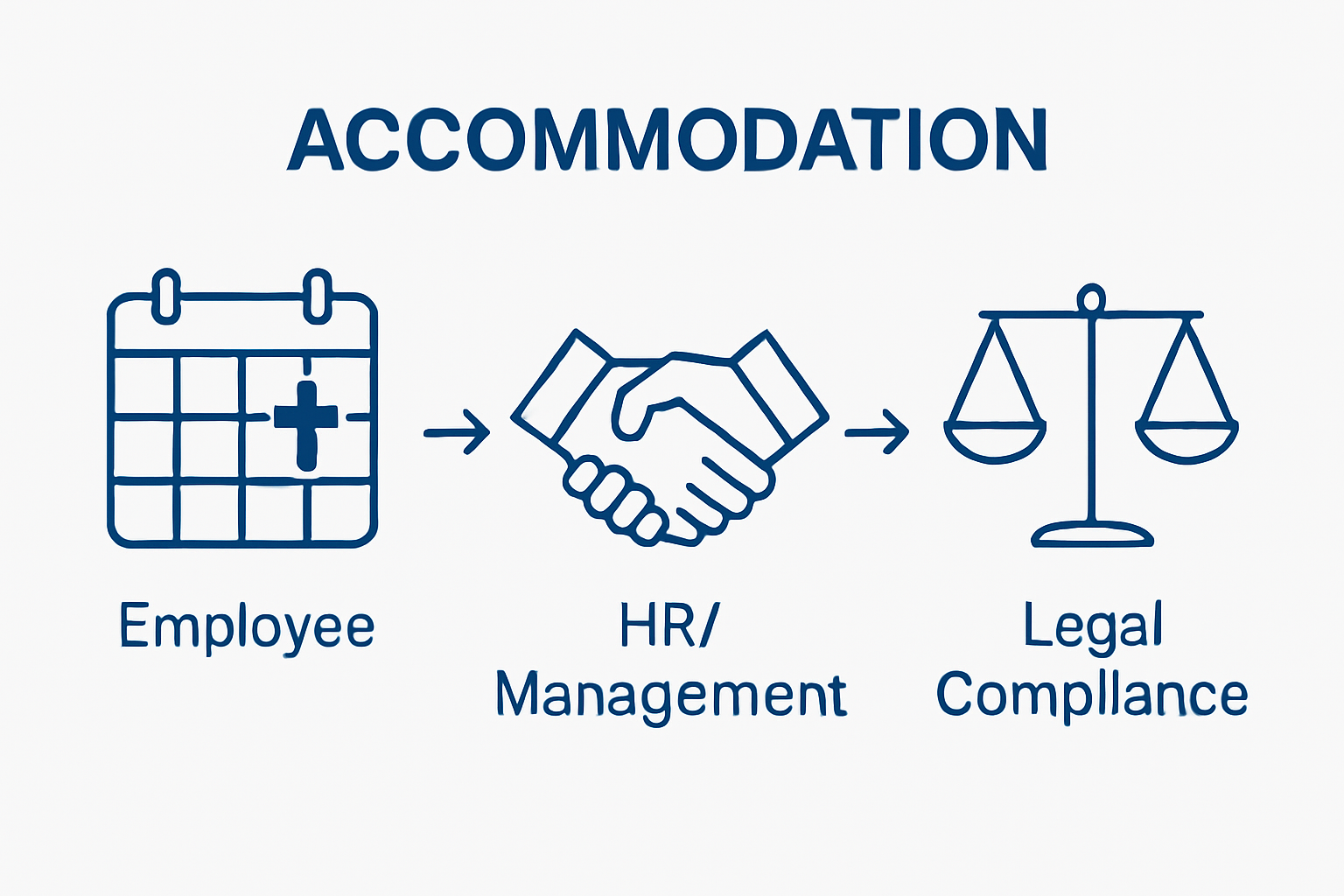 This might include:
- Allowing shift swaps among willing employees
- Implementing flexible work hours
- Providing unpaid leave for religious observances
- Creating inclusive scheduling policies
Legal and Ethical Considerations
Religious scheduling accommodations extend beyond mere legal compliance into fundamental workplace respect.
Successful approaches recognize that supporting employees’ religious practices contributes to a more diverse, inclusive, and ultimately more productive work environment. [Learn more about workplace religious protections to understand how organizations can effectively navigate these nuanced interactions between professional responsibilities and personal beliefs.
Case Studies: Real-World Examples of Lawsuits
Religious discrimination lawsuits provide critical insights into how workplace conflicts can escalate and the legal protections available to employees. According to the Equal Employment Opportunity Commission, thousands of religious discrimination claims are filed annually, highlighting the persistent challenges in maintaining inclusive work environments.
Landmark Workplace Religious Discrimination Cases
Significant legal precedents have emerged from complex religious discrimination disputes, demonstrating the nuanced nature of these conflicts. Some notable cases include:
- EEOC v. Abercrombie & Fitch: A landmark Supreme Court case where a Muslim job applicant was denied employment for wearing a headscarf, establishing that employers cannot make hiring decisions based on anticipated religious accommodations
- Young v. United Parcel Service: While primarily a pregnancy accommodation case, this ruling emphasized employers’ obligations to provide reasonable workplace adjustments
- EEOC v. Kansas City Power & Light: A case involving an employee’s right to observe religious practices without facing workplace retaliation
Emerging Trends in Religious Discrimination Litigation
Modern religious discrimination lawsuits increasingly focus on subtle forms of workplace marginalization. Key emerging trends demonstrate how discrimination can manifest beyond overt actions:
- Microaggressions targeting religious identities
- Systematic exclusion from professional opportunities
- Harassment disguised as workplace humor or criticism
- Indirect penalties for religious observance
Legal Strategies and Workplace Implications
These case studies reveal that successful religious discrimination claims require demonstrating clear patterns of systemic bias rather than isolated incidents. Explore our detailed verdicts and settlements to understand how legal strategies can effectively challenge discriminatory workplace practices and secure meaningful remedies for affected employees.
Steps to Take When Facing Discrimination
Confronting religious discrimination in the workplace requires strategic and documented approaches to protect your professional rights. The U.S. Equal Employment Opportunity Commission provides clear guidance on the critical steps employees must take when experiencing workplace discrimination.
Documenting the Discriminatory Incidents
Comprehensive documentation forms the foundation of any potential legal action. Employees should:
- Record dates, times, and specific details of discriminatory events
- Save emails, messages, or written communications demonstrating bias
- Note names and contact information of witnesses
- Maintain a detailed chronological log of incidents
- Preserve any physical or digital evidence of discriminatory behavior
Utilizing Internal Reporting Mechanisms
Before pursuing external legal action, employees must exhaust internal remedies. This typically involves:
- Reporting incidents to human resources departments
- Following company grievance procedures
- Requesting formal meetings to address discrimination concerns
- Seeking written documentation of reported incidents
- Requesting specific accommodations in writing
Seeking Legal Consultation and Filing Charges
When internal mechanisms fail, employees have critical legal recourse. The process involves:
- Consulting with an employment discrimination attorney
- Filing a charge with the Equal Employment Opportunity Commission
- Obtaining a right-to-sue letter within specified time frames
- Preserving all evidence and documentation
- Understanding your comprehensive employment discrimination rights to make informed legal decisions
Navigating religious discrimination claims requires patience, strategic documentation, and a clear understanding of both workplace policies and legal protections.
This table presents the steps to take when facing religious discrimination in the workplace, helping guide employees through the process outlined in the article.
| Step | Purpose | Key Actions |
|---|---|---|
| Document Discriminatory Incidents | Build a strong record for potential claims | Record details, save evidence, note witnesses |
| Utilize Internal Reporting Mechanisms | Seek resolution within the organization | Report to HR, follow grievance procedures, request accommodations |
| Seek Legal Consultation | Understand your legal rights and options | Consult an attorney, gather documentation, evaluate next steps |
| File a Charge with the EEOC | Initiate formal legal proceedings | Submit claim, obtain right-to-sue letter, meet deadlines |
| Preserve All Evidence | Ensure information is available for investigations or lawsuits | Maintain chronological logs, save all electronic and physical proof |
Protect Your Religious Rights at Work
Are you struggling to balance your religious observances with workplace expectations? You are not alone. Many employees face unfair treatment when requesting time off for religious holidays or confronting subtle workplace discrimination. This article has explained how complicated and stressful these situations can be, highlighting essential legal protections, accommodation laws, and the real risks of ignoring your own rights.
You deserve an advocate who understands employment law and will fight for your right to a discrimination-free workplace. Discover more about your protections and solutions by visiting our Employment Law Archives, a resource designed to support individuals like you. If you need immediate guidance or want to discuss your situation with experienced attorneys, take the first step now. Contact us directly at Serendib Law Firm for a free, confidential consultation. Protect your rights and move forward with confidence today.
Frequently Asked Questions
What constitutes religious discrimination in the workplace?
Religious discrimination occurs when an employer treats an employee or job applicant unfairly based on their religious beliefs or practices, as well as any sincerely held moral or ethical beliefs.
What legal protections exist for employees facing religious discrimination?
Title VII of the Civil Rights Act provides robust protections against religious discrimination, mandating that employers cannot make employment decisions based on an individual’s religious affiliations or practices and must provide reasonable accommodations for religious observances, barring undue hardship.
How can employers accommodate employees’ religious observances?
Employers can accommodate religious observances by offering flexible scheduling, modifying dress codes, allowing shift swaps, or making adjustments to the workspace to support employees’ religious practices.
What steps should I take if I experience religious discrimination at work?
If you experience religious discrimination, document the incidents, utilize internal reporting mechanisms, and seek legal consultation if necessary. It is important to preserve all evidence and follow proper procedures to ensure your rights are protected.