
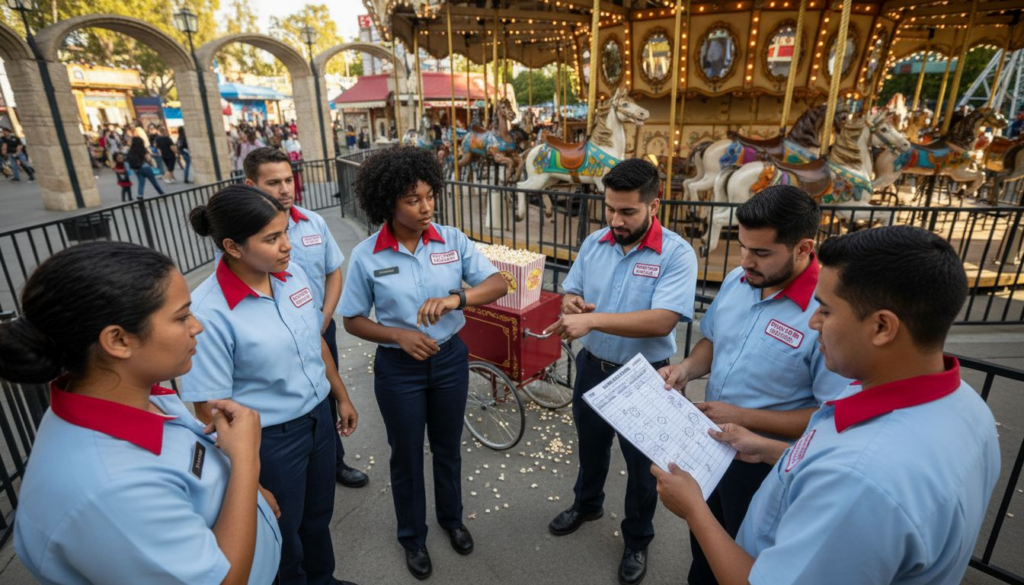
Unpaid overtime, missing hours on paychecks, and being asked to work without compensation are everyday realities for many amusement workers in Buena Park. These issues go far beyond simple mistakes and point to the broader problem of wage theft, where employers deny staff their legal earnings through unfair practices. If you are navigating confusing paychecks or suspect your compensation is falling short, understanding your rights and legal options can make a powerful difference in protecting your paycheck.
Table of Contents
- Defining Wage Theft In Amusement Industries
- Types Of Wage Violations Affecting Workers
- How California Laws Protect Entertainment Staff
- Workers’ Rights And Employer Responsibilities
- Pursuing Unpaid Wages And Legal Remedies
Key Takeaways
| Point | Details |
|---|---|
| Wage Theft Defined | Wage theft occurs when employers deny legally entitled compensation, including overtime and mandated benefits, often through systematic violations. |
| Prevalence in Amusement Industries | Seasonal employment and high turnover rates contribute to widespread wage theft, particularly impacting young and inexperienced workers. |
| California’s Protections | California offers robust labor laws safeguarding workers’ rights, including higher minimum wages and strict penalties for violations. |
| Pursuing Unpaid Wages | Workers can recover stolen wages through formal complaints and legal actions, utilizing multiple legal avenues available in California. |
Defining Wage Theft in Amusement Industries
Wage theft represents a systematic problem impacting workers across multiple industries, with amusement parks experiencing particularly complex wage violations. In its most fundamental definition, wage theft occurs when employers deliberately deny workers their legally entitled compensation, including minimum wage, overtime pay, and mandated benefits.
The illegal practice of wage theft manifests through multiple mechanisms specific to amusement industry contexts:
- Failing to pay overtime rates for hours worked beyond standard shifts
- Misclassifying employees as independent contractors to avoid benefit obligations
- Requiring workers to perform tasks “off the clock” without compensation
- Shorting hours on employee timecards
- Neglecting to pay for mandatory training or preparation time
In amusement industries, wage theft becomes especially prevalent due to seasonal employment patterns, high turnover rates, and workers often being younger or less experienced. Many employees may not understand their complete wage rights, making them vulnerable to exploitation.
Wage theft is not a minor administrative error, but a deliberate strategy that steals billions from workers annually.
California’s labor laws provide strong protections, yet enforcement remains challenging. Employers frequently exploit complex scheduling and compensation structures to minimize wage obligations.
Pro tip: Document every hour worked, keep detailed records of your shifts, and understand your specific employment classification to protect yourself against potential wage theft.
Types of Wage Violations Affecting Workers
In the amusement industry, workers face numerous complex wage violations that systematically undermine their financial rights. Wage theft encompasses multiple illegal practices targeting vulnerable employees, with specific mechanisms unique to entertainment and service sectors.
The most prevalent types of wage violations in amusement industries include:
- Unpaid overtime compensation
- Minimum wage rate violations
- Mandatory off-the-clock work without pay
- Illegal paycheck deductions
- Misclassification of employment status
- Failure to compensate for training or preparatory work
- Tip pooling or tip theft schemes
Employers often exploit the seasonal and transient nature of amusement work to manipulate compensation structures. Young workers, who typically comprise a significant portion of the amusement industry workforce, are particularly vulnerable to these exploitative practices due to limited understanding of their legal wage rights.
Wage violations are not random errors, but calculated strategies designed to reduce labor costs at workers’ expense.
Complex scheduling, inconsistent hours, and the high-turnover environment of amusement parks create numerous opportunities for employers to minimize wage obligations. Workers must remain vigilant and understand their rights to protect themselves from systematic wage theft.

Here’s how common wage theft violations in amusement industries compare:
| Violation Type | Who Is Most Affected | Typical Employer Motive |
|---|---|---|
| Unpaid overtime | Full-time staff | Reduce payroll costs |
| Off-the-clock work | Young/seasonal workers | Delay or avoid compensation |
| Employee misclassification | Contract/temporary labor | Exempt from benefits, taxes |
| Minimum wage violations | Part-time/entry level | Pay below legal requirement |
| Withholding training pay | Recently hired employees | Save on onboarding expenses |
Pro tip: Maintain detailed personal records of every hour worked, including start and end times, and document all tasks performed to build a strong defense against potential wage violations.
How California Laws Protect Entertainment Staff
California has developed a comprehensive legal framework designed to protect entertainment workers from wage theft and unfair labor practices. Labor laws provide robust protections for workers in the entertainment and amusement industries, establishing strong safeguards against systematic wage violations.
Key protections for entertainment staff include:
- Minimum wage guarantees above federal standards
- Mandatory overtime compensation
- Anti-retaliation provisions for workers reporting violations
- Required meal and rest break periods
- Strict penalties for misclassifying employees
- Protection against unpaid training and preparatory work
- Comprehensive overtime calculation rules
The state’s legal framework goes beyond basic federal requirements, creating multiple layers of defense for workers. California law mandates higher minimum wage rates, more stringent overtime calculations, and provides local enforcement mechanisms that give workers additional avenues to challenge wage violations.
California’s labor laws represent some of the most worker-friendly regulations in the United States, offering comprehensive protections against wage theft.
Unique to California, local offices like the Office of Wage Standards provide direct support for workers experiencing wage violations. These local enforcement mechanisms create additional accountability for employers, giving entertainment staff powerful tools to defend their financial rights.
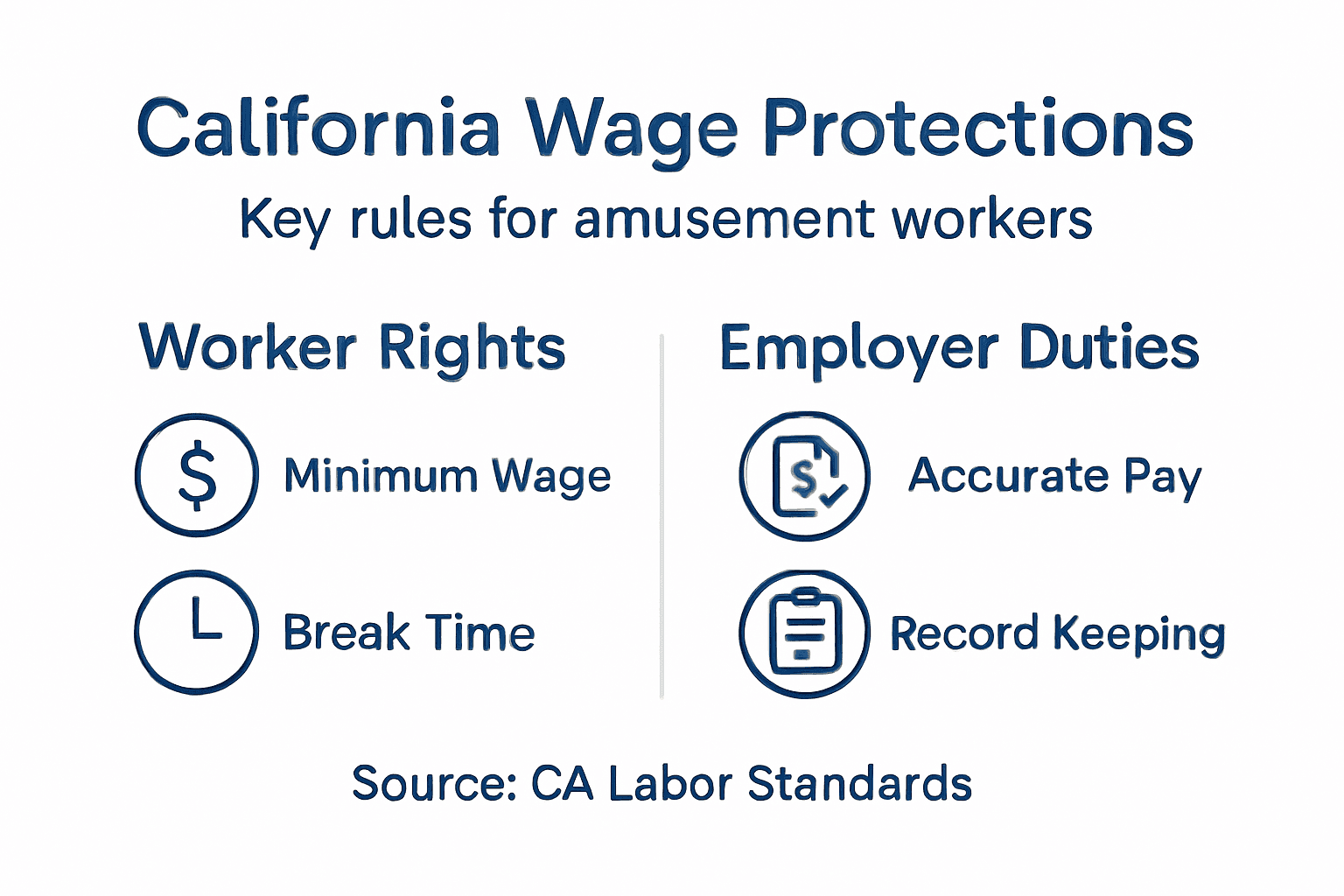
Below is a summary of how California’s unique labor regulations strengthen worker protections:
| Regulation Feature | California Laws | Federal Baseline |
|---|---|---|
| Minimum wage rate | Above federal minimum | Basic federal rate |
| Overtime calculation | Stricter and more comprehensive | Less detailed rules |
| Local enforcement support | Available in most counties | Limited to federal |
| Misclassification penalty | Steep financial consequences | Smaller penalties |
Pro tip: Familiarize yourself with California’s specific labor regulations and keep detailed documentation of all work hours and compensation to strengthen your potential legal claims.
Workers’ Rights and Employer Responsibilities
In the amusement industry, workers’ rights and employer responsibilities are complex legal frameworks designed to protect employees from exploitation. Fair labor standards establish critical protections for entertainment staff, creating clear expectations for workplace compensation and treatment.
Key employer responsibilities include:
- Paying minimum wage according to state and federal standards
- Providing accurate timekeeping and compensation records
- Classifying employees correctly
- Compensating all hours worked, including training and preparatory time
- Maintaining safe working conditions
- Providing mandatory meal and rest breaks
- Preventing workplace retaliation for reporting violations
Employers in Buena Park’s amusement industries must navigate a complex landscape of legal obligations. Workers are protected by multiple layers of regulations that require transparent, fair compensation practices. Failure to comply can result in significant financial penalties and potential legal action.
Employer responsibilities extend far beyond simple wage payment – they represent a fundamental commitment to worker dignity and fair labor practices.
The legal framework empowers workers to challenge improper workplace practices, creating accountability mechanisms that protect against systemic wage theft. Entertainment staff have multiple avenues to report violations, including state labor boards and local enforcement offices.
Pro tip: Always document workplace interactions, hours worked, and any potential violations to build a strong case if wage theft occurs.
Pursuing Unpaid Wages and Legal Remedies
Amusement workers in Buena Park have multiple legal avenues to recover stolen wages and hold employers accountable for wage theft. Legal remedies provide comprehensive recovery strategies for workers experiencing systematic compensation violations.
Key steps for pursuing unpaid wages include:
- Filing formal complaints with California Labor Commissioner’s Office
- Initiating wage claim proceedings
- Documenting all hours worked and compensation discrepancies
- Consulting with employment law attorneys specializing in wage theft
- Exploring potential class action lawsuit options
- Reporting violations to state and federal labor departments
- Gathering supporting evidence like pay stubs and work records
California’s robust legal framework offers workers multiple protections and recovery mechanisms. Employees can pursue individual claims or participate in collective actions that challenge systemic workplace compensation violations. These legal strategies create powerful accountability measures for employers engaged in wage theft.
Wage recovery is not just about individual compensation, but about establishing workplace justice and preventing future violations.
The state’s enforcement mechanisms provide substantial penalties for employers who violate wage laws, including potential financial sanctions and mandatory wage restitution. Workers have the power to challenge unfair compensation practices through administrative and judicial channels.
Pro tip: Preserve all employment documentation and create a detailed timeline of wage discrepancies before initiating legal proceedings.
Protect Your Rights Against Wage Theft in Buena Park Amusement Work
If you work in Buena Park’s amusement industry and suspect wage theft or other pay violations you are not alone. Wage theft often impacts young, seasonal, and part-time workers through unpaid overtime, off-the-clock tasks, or misclassification. These illegal practices can cause serious financial hardship and frustration for hardworking employees who deserve fair compensation under California law. Understanding your rights is the first step toward reclaiming what you are owed and stopping wage violations before they continue.
At Serendib Law Firm we specialize in defending workers facing wage theft and employment abuses in Orange County and beyond. Explore our Wage Violations Archives | Serendib Law Firm to learn more about legal protections and how to fight back. We also know how important rest and meal breaks are in protecting your pay – see our insights on Meal and Rest Breaks Archives | Serendib Law Firm.
Do not let your employer take advantage of you. Act now to secure the wages you deserve. Contact us today at Serendib Law Firm for a free consultation and let our experienced attorneys guide you through every step to enforce your rights and recover unpaid wages.
Frequently Asked Questions
What is wage theft?
Wage theft occurs when employers deliberately deny workers their legally entitled compensation, including minimum wage, overtime pay, and mandated benefits.
What are common types of wage theft in the amusement industry?
Common types of wage theft in the amusement industry include unpaid overtime, minimum wage violations, off-the-clock work, illegal paycheck deductions, misclassification of employment status, and withholding pay for training.
How can amusement workers protect themselves from wage theft?
Amusement workers can protect themselves by maintaining detailed records of hours worked, knowing their employment classification, and being aware of their legal wage rights.
What legal options do workers have to recover unpaid wages?
Workers can pursue recovery of unpaid wages by filing complaints with the Labor Commissioner’s Office, documenting hours worked, consulting with employment lawyers, and potentially participating in class action lawsuits.
One Response