

Nearly one in five american government contractors reports witnessing serious violations in the workplace each year. For those working in Anaheim, knowing your rights matters when integrity and job security are both on the line. With strict legal safeguards in place, this guide will help you understand how whistleblower protections keep you covered and what actions to take if you face wrongdoing in your role.
Table of Contents
- Whistleblower Protections For Government Contractors
- Types Of Protected Disclosures And Employees
- Applicable Federal And California Laws
- Filing Whistleblower Complaints In Anaheim
- Employee Rights And Employer Obligations
- Risks, Retaliation, And Legal Remedies
Key Takeaways
| Point | Details |
|---|---|
| Whistleblower Protections | Government contractors are legally protected when disclosing serious workplace violations, including abuse of authority and violations of law. |
| Types of Protected Disclosures | Protected disclosures encompass a variety of serious issues that may threaten public safety or governmental integrity. |
| Filing Complaints | Contractors should be familiar with proper procedures for reporting misconduct to effectively protect their rights. |
| Risks and Remedies | Whistleblowers face potential retaliation but have access to comprehensive legal remedies if they encounter discrimination or bias. |
Whistleblower Protections for Government Contractors
Government contractors in Anaheim play a critical role in supporting public sector operations, and their right to report misconduct without fear of retaliation is protected by robust federal regulations. According to the General Services Administration, federal employees, contractors, subcontractors, and personal service contractors are legally safeguarded when disclosing serious workplace violations.
The specific protections cover a wide range of critical disclosures, including situations involving:
- Violations of law
- Gross mismanagement
- Waste of federal funds
- Abuse of authority
- Substantial dangers to public health or safety
Contractors who choose to report these issues are shielded from adverse personnel actions, ensuring they can speak up without compromising their professional standing. The Federal Trade Commission’s Office of Inspector General emphasizes that federal law provides strong safeguards specifically designed to protect whistleblowers across various employment statuses, including those working for federal contractors, subcontractors, grantees, and subgrantees.
Navigating whistleblower protections requires understanding both your rights and the proper channels for reporting misconduct. While the legal framework offers substantial protection, it’s crucial to document all interactions and follow established reporting procedures meticulously. Government contractors should consult with employment law specialists who can provide tailored guidance through the complex landscape of whistleblower regulations and ensure your professional interests remain protected throughout the disclosure process.
Types of Protected Disclosures and Employees
Government contractors in Anaheim must understand the specific types of disclosures that qualify for legal protection under federal whistleblower statutes. General Services Administration guidelines define protected disclosures as reports involving critical workplace issues that potentially compromise public safety, governmental integrity, or federal resources.
The comprehensive range of protected disclosures includes:
- Violations of federal laws or regulations
- Instances of gross mismanagement within government operations
- Substantial waste of federal funds
- Documented abuse of official authority
- Significant dangers to public health and safety
Employees eligible for these robust protections extend far beyond traditional federal workers. According to the Federal Trade Commission’s Office of Inspector General, protected individuals encompass a broad spectrum of government-adjacent professionals, including:
- Federal employees
- Direct government contractors
- Subcontractors
- Grantees
- Subgrantees
- Personal service contractors
Navigating these protections requires a nuanced understanding of legal boundaries and documentation standards.
 Proper substantiation of claims is crucial, as whistleblower protections are not blanket immunity but carefully defined legal safeguards. Contractors considering disclosure should meticulously gather evidence, understand procedural requirements, and ideally consult with employment law specialists who can provide strategic guidance through this complex legal landscape.
Applicable Federal and California Laws
Government contractors in Anaheim must navigate a complex legal landscape of whistleblower protections that span both federal and state regulations. Congress is actively working to strengthen these protections, with recent legislative efforts like the ‘Expanding Whistleblower Protections for Contractors Act of 2025’ aimed at providing comprehensive safeguards for individuals reporting potential misconduct.
At the state level, California offers robust additional protections. California Labor Code Section 1102.5 provides critical legal shields for workers, specifically prohibiting employers from:
- Retaliating against employees who disclose violations of state or federal statutes
- Enforcing policies that prevent employees from reporting potential misconduct
- Taking adverse actions against workers who participate in investigations
Federal protections complement these state-level safeguards, creating a multi-layered legal framework for government contractors.
Key federal statutes include the Whistleblower Protection Act and various agency-specific regulations that ensure contractors can report potential violations without fear of professional repercussions. California employment law experts recommend maintaining detailed documentation and understanding the nuanced interactions between federal and state whistleblower protection mechanisms to effectively assert and protect one’s rights in potential disclosure scenarios.
Filing Whistleblower Complaints in Anaheim
Government contractors in Anaheim must understand the precise procedures for filing whistleblower complaints to protect their legal rights. California State Auditor’s Office provides multiple channels for reporting improper governmental activities, ensuring that workers have accessible methods to disclose potential misconduct.
The complaint filing process typically involves several critical steps:
- Documenting the specific nature of the misconduct
- Gathering supporting evidence
- Identifying the appropriate reporting agency
- Preserving confidential communication channels
- Maintaining detailed records of all interactions
According to the California Public Utilities Commission, whistleblowers can submit complaints through various methods, including:
- Online complaint submission platforms
- Dedicated whistleblower hotlines
- Secure postal mail communication
- Confidential telephonic reporting systems
Navigating the complex landscape of whistleblower protections requires strategic preparation and careful documentation. Anaheim whistleblower claims experts recommend consulting legal professionals who can provide guidance on protecting your rights, maintaining confidentiality, and ensuring your disclosure follows all necessary procedural requirements while minimizing potential professional risks.
Employee Rights and Employer Obligations
Government contractors in Anaheim operate within a robust legal framework that clearly defines employee rights and employer responsibilities regarding whistleblower protections. California Department of Industrial Relations regulations emphasize that employees have fundamental rights to report violations without experiencing professional repercussions.
Employees are guaranteed critical protections, including:
- The right to disclose legal or regulatory violations
- Protection from retaliatory actions
- Confidentiality during reporting processes
- Preservation of professional standing
- Immunity from disciplinary measures related to good-faith disclosures
According to the California State Auditor, employers face significant legal obligations and potential penalties for non-compliance. The Whistleblower Protection Act prohibits employers from engaging in retaliatory behaviors such as:
- Intimidation
- Blocking promotions
- Implementing punitive disciplinary measures
- Creating hostile work environments
- Undermining professional reputation
Navigating these complex legal landscapes requires strategic understanding and careful documentation. Employee rights experts recommend maintaining comprehensive records, understanding procedural nuances, and seeking professional legal counsel to effectively protect one’s professional interests when encountering potential workplace misconduct.
Risks, Retaliation, and Legal Remedies
Government contractors in Anaheim face significant potential risks when reporting workplace misconduct, making understanding whistleblower protections critically important. California Department of Industrial Relations highlights the complex landscape of potential retaliatory actions that whistleblowers might encounter during their professional disclosure process.
Common risks for whistleblowers include:
- Unexpected job termination
- Unexpected demotion or reduced responsibilities
- Professional isolation or marginalization
- Harassment or hostile work environment
- Career progression blockages
- Potential financial and professional reputation damage
According to the California State Auditor, legal remedies are comprehensive and designed to protect workers who disclose misconduct. Potential legal remedies for whistleblowers experiencing retaliation encompass:
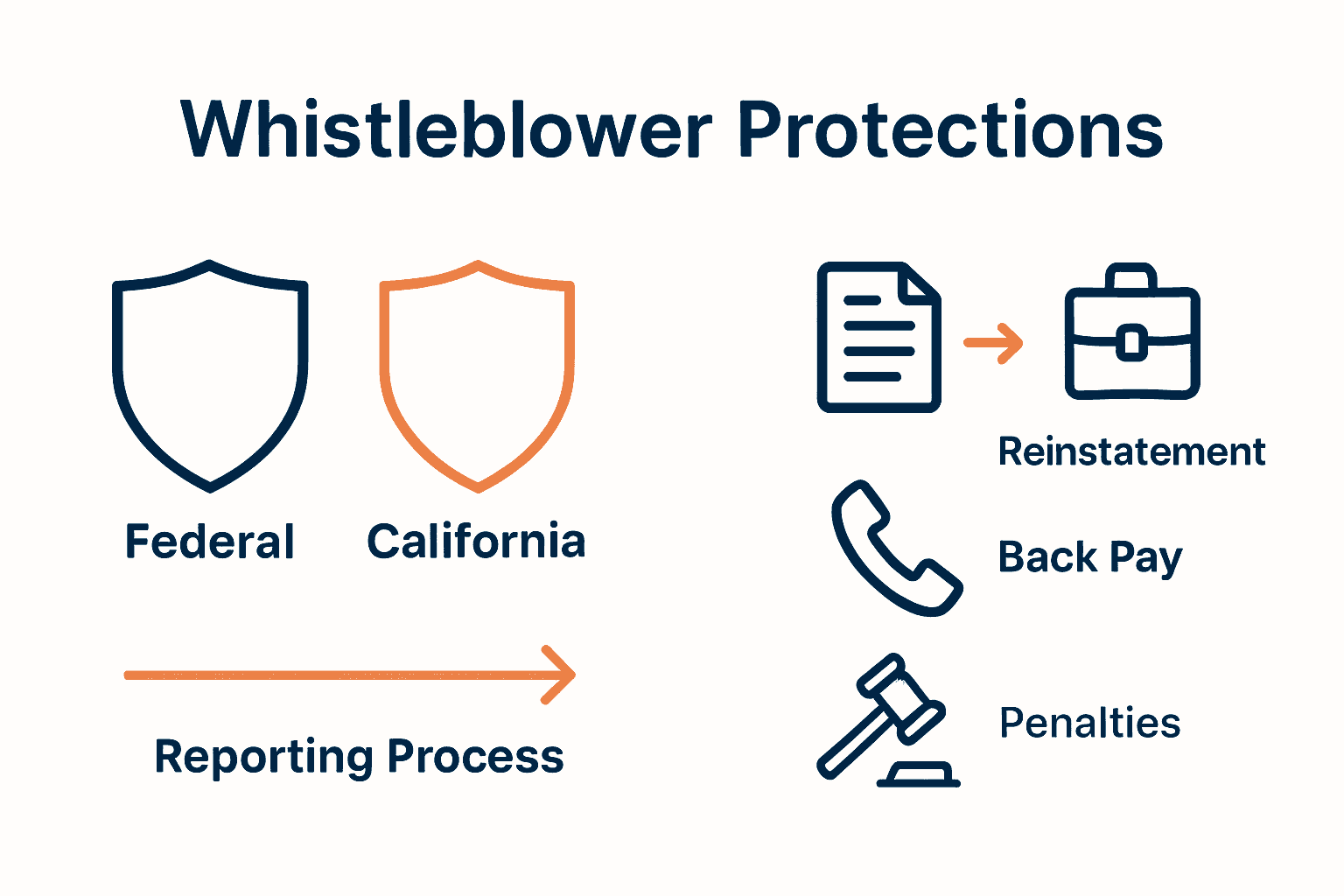
- Full job reinstatement
- Complete back pay recovery
- Compensation for emotional distress
- Civil penalties against retaliating employers
- Potential punitive damages
Navigating these complex legal challenges requires strategic preparation and expert guidance. Whistleblower retaliation experts recommend maintaining meticulous documentation, understanding your legal rights, and seeking professional legal counsel to effectively protect your professional interests and ensure comprehensive legal support throughout the disclosure and potential litigation process.
Protect Your Rights as a Government Contractor in Anaheim
If you are a government contractor facing difficult decisions about reporting workplace misconduct, you are not alone. The risk of retaliation can be overwhelming, but federal and California laws offer strong whistleblower protections designed to keep you safe. Understanding your rights and having expert legal support makes all the difference when exposing violations like gross mismanagement or abuse of authority. Don’t let fear or uncertainty stop you from doing what is right.
At Serendib Law Firm, we specialize in defending the rights of employees and contractors under these complex protections. Our skilled attorneys provide personalized guidance through every step of the whistleblower process to protect your career and professional reputation. Learn more about how we aggressively fight against retaliation in Whistleblower Retaliation cases and explore resources specific to our local community in Anaheim. Take control of your situation today by scheduling a free consultation at Serendib Law Firm and get the trusted legal advocacy you deserve.
Frequently Asked Questions
What protections do whistleblowers have under federal law?
Whistleblowers are protected from retaliation when disclosing serious workplace violations, including violations of law, gross mismanagement, waste of federal funds, abuse of authority, and significant dangers to public health or safety.
Who qualifies for whistleblower protections?
Protections extend to federal employees, contractors, subcontractors, grantees, subgrantees, and personal service contractors reporting misconduct.
How can government contractors file whistleblower complaints?
Contractors can file complaints by documenting the misconduct, gathering evidence, identifying the appropriate reporting agency, and submitting complaints through online platforms, hotlines, or postal communication.
What should a whistleblower do if they experience retaliation?
Whistleblowers facing retaliation can seek legal remedies, including job reinstatement, back pay recovery, compensation for emotional distress, and potential civil penalties against the employer.