

Whistleblower retaliation is a serious threat within american healthcare clinics, often hidden yet alarmingly common. Studies show that over one in five healthcare workers experience retaliation after reporting wrongdoing. This issue can damage careers and compromise patient safety, making it crucial for both staff and patients to understand what retaliation looks like and how to address it. Exploring this topic helps american professionals recognize warning signs and better protect themselves while supporting ethical standards in the workplace.
Table of Contents
- Defining Whistleblower Retaliation in Healthcare Clinics
- Common Types of Fraud in Santa Ana Clinics
- Legal Protections for Whistleblowers in California
- How to Report Safety or Billing Violations
- Potential Risks and Remedies for Retaliation Victims
Key Takeaways
| Point | Details |
|---|---|
| Whistleblower Retaliation Risks | Employees in healthcare clinics may face adverse professional consequences for reporting misconduct, including termination and performance manipulation. |
| Types of Common Fraud | Healthcare fraud, including billing for unperformed services and falsifying medical records, undermines patient trust and requires vigilant reporting. |
| Legal Protections in California | California law provides robust protections for whistleblowers, safeguarding them from retaliation and enabling legal recourse against harmful actions. |
| Effective Reporting Strategies | Proper documentation and knowledge of reporting channels are essential for safely reporting safety or billing violations while protecting one’s professional integrity. |
Defining Whistleblower Retaliation in Healthcare Clinics
Whistleblower retaliation in healthcare clinics represents a critical workplace issue where employees face adverse professional consequences after reporting unethical, dangerous, or illegal practices. According to the United Nations Office on Drugs and Crime, such retaliation occurs when healthcare workers experience unjustified treatment following a disclosure about workplace misconduct.
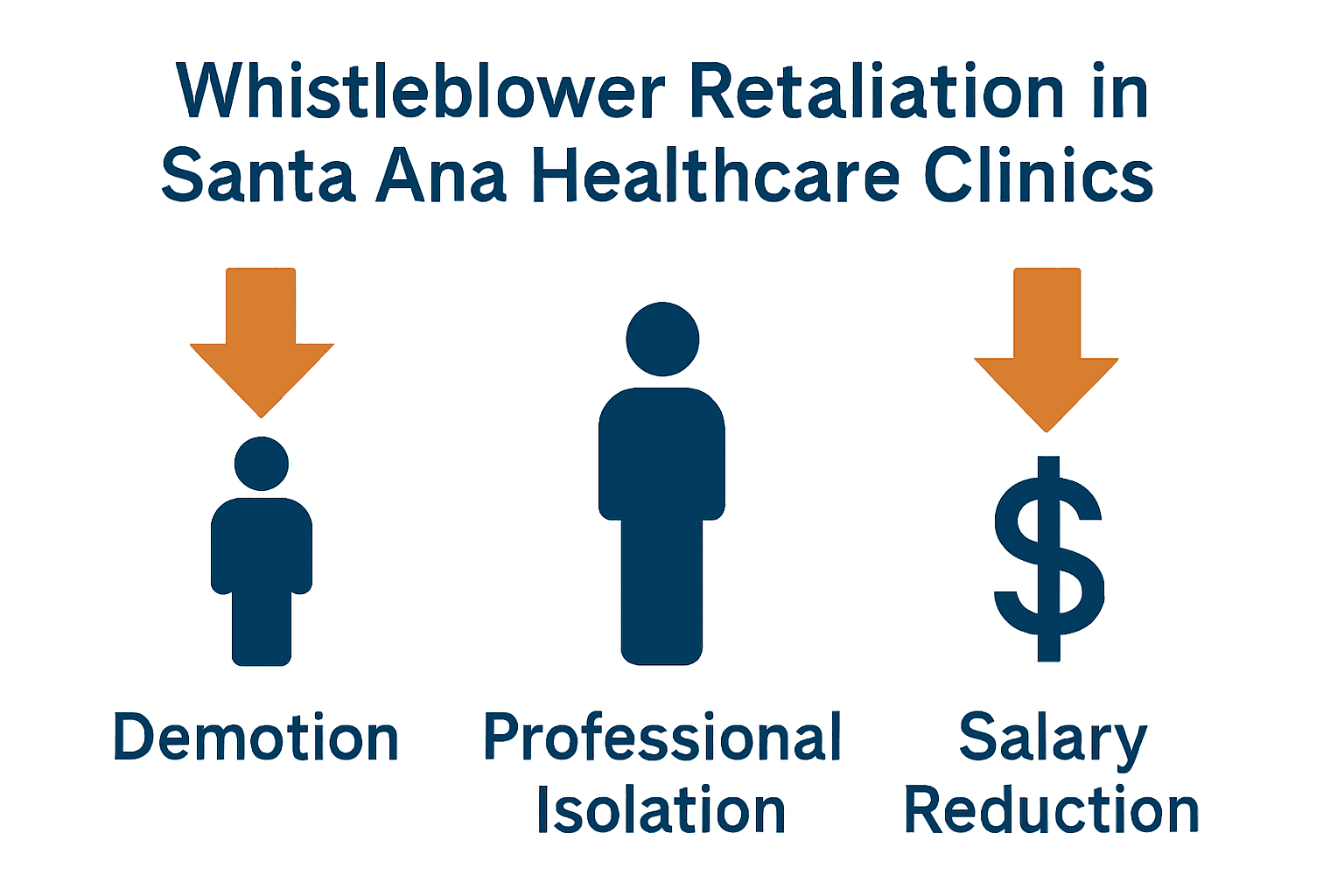
In the complex landscape of medical environments, whistleblower retaliation can manifest through numerous damaging actions. These may include unexpected demotions, reduced work hours, hostile work environments, deliberate professional isolation, performance evaluation manipulation, or even outright termination. Office of Research Integrity emphasizes that institutions have a fundamental duty to protect individuals who report research misconduct and ensure complaints are handled objectively.
Healthcare whistleblowers typically expose critical issues like patient safety violations, fraudulent billing practices, medication errors, inadequate care standards, or systemic ethical breaches. Protection laws recognize that these courageous professionals play a crucial role in maintaining healthcare integrity. When whistleblower retaliation trends emerge, legal recourse becomes essential to safeguard both individual workers and broader institutional accountability.
Key characteristics of healthcare whistleblower retaliation include:
- Intentional professional marginalization
- Punitive performance evaluations
- Unexpected job reassignments
- Salary or benefit reductions
- Creating a hostile work environment
- Subtle or overt termination attempts
Understanding these dynamics empowers healthcare professionals to recognize potential retaliation and take appropriate legal action to protect their rights and professional standing.
Common Types of Fraud in Santa Ana Clinics
Healthcare fraud in Santa Ana clinics represents a serious systemic problem that undermines patient trust and medical integrity. Office of Inspector General investigations have revealed multiple fraudulent practices that often trigger critical whistleblower actions.
Some of the most prevalent types of healthcare fraud in Santa Ana clinics include fraudulent billing practices. According to Washington State Human Rights Commission, these can range from billing for services never provided to deliberately inflating medical procedure costs. Clinics might submit claims for treatments patients never received, create phantom billing entries, or use upcoding techniques to maximize reimbursement from insurance providers.
Additional fraud types encompass more sophisticated manipulation strategies. These include falsifying medical records, prescribing unnecessary medical tests or procedures to generate additional revenue, submitting duplicate claims, and misrepresenting patient diagnoses to secure higher insurance payouts. Experienced Santa Ana Workplace Retaliation Lawyers often encounter cases where healthcare professionals expose these systematic fraudulent activities.
Key fraud categories in Santa Ana clinics include:
- Billing for unperformed services
- Upcoding medical procedures
- Falsifying patient medical records
- Prescribing unnecessary medical tests
- Submitting duplicate insurance claims
- Misrepresenting patient diagnoses
Recognizing these fraudulent practices is crucial for maintaining healthcare system integrity and protecting patient rights.
 Whistleblowers who report such misconduct play a vital role in exposing systemic healthcare fraud and preventing ongoing financial and medical abuse.
Legal Protections for Whistleblowers in California
California provides robust legal protections for healthcare whistleblowers, recognizing their critical role in maintaining institutional integrity and public safety. American Institute of Healthcare Compliance details comprehensive legal obligations that shield employees who report potential misconduct from adverse professional consequences.
Under state law, whistleblower protection extends to employees who disclose violations of state or federal regulations, unsafe workplace conditions, patient care violations, or fraudulent activities. The False Claims Act offers significant safeguards, allowing healthcare workers to report misconduct without fear of retaliation. Whistleblower Protection resources highlight that these protections cover a wide range of reporting scenarios, including internal disclosures to management and external reports to regulatory agencies.
Key legal protections for California whistleblowers encompass multiple defensive mechanisms. These include protection against termination, demotion, salary reduction, work schedule manipulation, professional isolation, and other retaliatory actions. Employees who experience such treatment after making good-faith reports can pursue legal remedies, including reinstatement, back pay, compensation for damages, and potential punitive damages against the offending institution.
Comprehensive legal protections include:
- Immunity from retaliatory termination
- Protection against professional demotion
- Safeguards against salary or benefit reductions
- Legal recourse for workplace harassment
- Preservation of professional reputation
- Right to file complaints with state agencies
Navigating whistleblower protections requires understanding complex legal frameworks. Consulting with specialized employment lawyers can help healthcare professionals effectively assert their rights and protect themselves from potential institutional retaliation.
How to Report Safety or Billing Violations
Reporting safety or billing violations in healthcare settings requires a strategic and careful approach to protect both patient welfare and professional integrity. University of California, Merced provides comprehensive guidelines for individuals seeking to report potential misconduct through appropriate institutional channels.
The reporting process involves several critical steps. Documentation is paramount when preparing to report a violation. This includes gathering concrete evidence such as billing records, patient care documentation, communication trails, and specific instances of observed misconduct. Whistleblower Protections for Anaheim Healthcare Employees emphasizes the importance of maintaining a detailed, factual record that can substantiate your claims and protect you from potential retaliation.
Healthcare professionals have multiple reporting channels available when addressing safety or billing violations. Internal reporting mechanisms typically include direct communication with supervisors, compliance officers, or human resources departments. External reporting options encompass state medical boards, healthcare regulatory agencies, Medicare fraud hotlines, and legal authorities specializing in healthcare compliance. Whistleblowers should prioritize channels that offer the strongest legal protections and maintain confidentiality.
Key steps for effective reporting include:
- Collect comprehensive, factual documentation
- Identify appropriate internal reporting channels
- Understand your legal whistleblower protections
- Maintain detailed, timestamped records
- Seek legal consultation before making formal reports
- Preserve original documentation securely
Navigating the reporting process can be complex and potentially risky. Consulting with specialized employment attorneys who understand healthcare whistleblower protections can provide critical guidance and help safeguard your professional interests throughout the reporting process.
Potential Risks and Remedies for Retaliation Victims
Healthcare whistleblowers face significant professional and personal risks when exposing institutional misconduct. PubMed research highlights the profound challenges whistleblowers encounter, including systematic bullying, professional ostracization, and potential career-threatening retribution that extends far beyond their current workplace.
The potential risks for whistleblowers are multifaceted and can include devastating professional consequences. Workplace Retaliation documentation reveals common retaliation strategies such as unexpected performance evaluations, deliberate professional isolation, reduced work hours, strategic demotion, salary reductions, and ultimately, wrongful termination. These actions are designed to discourage future reporting and create a chilling effect within healthcare institutions.
Remedies for retaliation victims are complex but robust, offering multiple legal pathways to address workplace misconduct. According to the International Journal of Health Policy and Management, effective strategies include filing comprehensive legal complaints, seeking reinstatement, pursuing back pay and damages, and leveraging whistleblower protection statutes. Healthcare professionals can also file complaints with state labor boards, pursue federal whistleblower protections, and seek injunctive relief to prevent further retaliatory actions.
Key risks whistleblowers might encounter include:
- Professional reputation damage
- Career advancement obstacles
- Unexpected job termination
- Workplace harassment
- Financial instability
- Emotional and psychological stress
Navigating retaliation requires strategic legal support and comprehensive documentation. Consulting specialized employment attorneys who understand healthcare whistleblower protections can provide critical guidance in transforming potential professional vulnerability into a strong legal strategy for justice and accountability.
Protect Your Rights Against Whistleblower Retaliation in Santa Ana Clinics
If you are a healthcare professional facing retaliation after reporting fraud or safety violations in your clinic you are not alone. The challenges of whistleblower retaliation such as wrongful termination, professional isolation, and hostile work environments can feel overwhelming and threaten your career. Understanding your legal protections and knowing when to take action is essential to safeguard your rights and future.
At Serendib Law Firm we specialize in defending employees against workplace retaliation and wrongful treatment. Explore our Whistleblower Retaliation Archives | Serendib Law Firm to learn more about your protections. Don’t wait until retaliation damages your reputation or finances. Visit Serendib Law Firm today for a free consultation and take the first step toward securing the justice and peace of mind you deserve. Your courage to speak up matters and we are here to stand with you every step of the way.
Frequently Asked Questions
What constitutes whistleblower retaliation in healthcare clinics?
Whistleblower retaliation in healthcare clinics is when employees face adverse consequences, such as demotion or termination, after reporting unethical or illegal practices related to patient safety, billing fraud, or other misconduct.
What are common forms of retaliation faced by healthcare whistleblowers?
Common forms of retaliation include unexpected job reassignments, punitive performance evaluations, salary reductions, professional isolation, and even termination of employment.
How can I report safety or billing violations in a clinic?
To report safety or billing violations, document all relevant evidence and follow your clinic’s internal reporting channels, such as speaking to a supervisor or compliance officer. You may also consider external options like regulatory agencies or legal authorities specializing in healthcare compliance.
What legal protections do whistleblowers have in California?
California provides robust legal protections for whistleblowers, including immunity from retaliation, protection against termination or demotion, and the right to pursue legal remedies for workplace harassment and damages.