

Losing your job after filing a workers’ compensation claim can feel like a betrayal of basic american rights, especially for workers in Santa Ana. Nearly 1 in 5 employees nationwide report facing retaliation or discriminatory treatment after reporting workplace injuries. Understanding wrongful termination in the context of workers’ compensation is crucial because retaliatory firings break the law and risk your livelihood. This guide clarifies common employer tactics and explains your options so you can protect your career and claim the justice you deserve.
Table of Contents
- Defining Wrongful Termination In Workers’ Comp Cases
- California Laws Protecting Injured Workers
- Recognizing Retaliation And Discrimination Tactics
- Employee Rights During And After A Claim
- Filing Claims And Seeking Legal Remedies
Key Takeaways
| Point | Details |
|---|---|
| Understanding Wrongful Termination | Wrongful termination occurs when an employer fires an employee in retaliation for filing a workers’ compensation claim. It is illegal and protected under anti-retaliation laws. |
| California Protections for Injured Workers | California offers comprehensive legal safeguards for injured workers to prevent discriminatory actions from employers, including protections against retaliation. |
| Recognizing Discrimination Tactics | Employers may use various subtle and overt discriminatory tactics to retaliate against workers, which are illegal and can constitute wrongful termination. |
| Filing Complaints and Seeking Remedies | Employees can file complaints with relevant agencies if they experience retaliation, seeking remedies like reinstatement and compensation for damages. |
Defining Wrongful Termination in Workers’ Comp Cases
Wrongful termination occurs when an employer illegally fires an employee, particularly after they have filed a workers’ compensation claim. Under standard employment law, most workers are considered at-will employees, which means an employer can technically terminate their position for almost any reason. However, there are critical legal protections that prevent employers from firing workers in retaliation for exercising their statutory rights.
In workers’ compensation cases, wrongful termination specifically refers to situations where an employer deliberately fires an employee as punishment or retaliation for filing a legitimate workers’ comp claim. Wrongful discharge laws provide important exceptions to at-will employment, protecting workers who seek compensation for workplace injuries. These legal protections ensure that employees cannot be punished for pursuing their legally guaranteed medical benefits and injury recovery support.
Legal experts recognize three primary scenarios that might constitute wrongful termination in workers’ compensation contexts. First, direct retaliation where an employer fires an employee immediately after they file a claim. Second, constructive discharge, where the employer deliberately creates such hostile work conditions that the employee feels compelled to resign. Third, termination that violates explicit employment contracts or public policy protections designed to safeguard workers’ rights to pursue legitimate compensation claims.
Here’s how key wrongful termination scenarios differ:
| Scenario Type | Employer Action | Legal Protection Involved |
|---|---|---|
| Direct retaliation | Immediate firing | Anti-retaliation laws |
| Constructive discharge | Hostile work environment | Public policy protections |
| Contract/public policy violation | Breach of explicit terms | Contract law and employment statutes |
Pro tip: Always document every interaction and communication related to your workers’ compensation claim to establish a clear record of potential retaliatory actions if termination occurs.
California Laws Protecting Injured Workers
California has established comprehensive legal protections for workers who sustain injuries on the job, creating one of the most robust workers’ compensation systems in the United States. Workers’ compensation laws mandate that employers provide insurance coverage that ensures medical care and wage replacement for employees injured during work-related activities, regardless of who might be at fault for the injury.
The California Division of Workers’ Compensation (DWC) enforces critical safeguards that prohibit employers from retaliating against employees who file legitimate workers’ compensation claims. These protections extend to all workers, including those with temporary or permanent disabilities, and cover a wide range of workplace injury scenarios. Employees are guaranteed the right to medical treatment, disability benefits, and job protection, ensuring they can recover and return to work without fear of losing their employment.
Under California law, injured workers have several key rights that shield them from discriminatory practices. These include the right to select a treating physician, receive necessary medical treatments, obtain temporary disability payments, and pursue permanent disability benefits if the injury results in long-term impairment. Employers are strictly prohibited from terminating, demoting, or creating hostile work environments for employees who exercise their legal right to file workers’ compensation claims.
Pro tip: Maintain detailed documentation of your workplace injury, medical treatments, and all communications with your employer to strengthen your legal protections and potential compensation claims.
Recognizing Retaliation and Discrimination Tactics
Workplace retaliation represents a serious legal violation where employers attempt to punish employees for exercising their legally protected rights, particularly after filing workers’ compensation claims. Workplace retaliation involves specific discriminatory actions designed to intimidate or penalize workers who assert their statutory protections, creating a hostile and potentially unlawful work environment.

Employers commonly use subtle and overt tactics to discriminate against workers who have filed compensation claims. These strategies may include sudden performance evaluations with unjustified negative feedback, unexpected job reassignments to less desirable positions, reduction in work hours, denial of promotional opportunities, or creating increasingly difficult working conditions intended to force an employee’s resignation. Such manipulative behaviors are legally prohibited and can constitute clear evidence of retaliatory intent.
The most frequent discrimination tactics include targeted harassment, strategic isolation from workplace communication networks, unexplained changes in job responsibilities, and deliberate attempts to undermine an employee’s professional reputation. Managers might also engage in micromanagement, excessive criticism, or create unrealistic performance expectations specifically aimed at workers who have previously filed workers’ compensation claims. These actions are designed to create an intolerable work environment that pressures employees into quitting voluntarily, a practice known as constructive discharge.
A summary of discrimination tactics and their common impact:
| Discriminatory Tactic | Typical Employer Behavior | Impact on Employee |
|---|---|---|
| Negative performance reviews | Unjustified criticism | Damaged reputation |
| Job reassignment | Less desirable positions | Reduced job satisfaction |
| Reduction in hours | Fewer assigned shifts | Financial stress |
| Promotional denial | Withheld advancement | Limited career progression |
Pro tip: Consistently document every interaction, communication, and potential discriminatory incident with precise dates, witnesses, and detailed descriptions to build a comprehensive record of potential workplace retaliation.
Employee Rights During and After a Claim
Employees who file workers’ compensation claims have robust legal protections designed to safeguard their employment rights and prevent discriminatory actions by employers. Employees can assert specific rights against employers who attempt to punish or terminate them for seeking legitimate workplace injury compensation. These protections ensure workers can pursue medical treatment and financial recovery without fear of professional retaliation.
During the workers’ compensation claim process, employees maintain critical legal rights that shield them from adverse employment actions. These rights include continued employment, protection from discriminatory treatment, the ability to return to their previous position or an equivalent role, and access to medical treatments related to their workplace injury. Employers are legally prohibited from creating hostile work environments, reducing work hours, denying promotional opportunities, or implementing punitive performance evaluations as a means of pressuring injured workers.
After filing a workers’ compensation claim, employees retain powerful legal recourse if their rights are violated. Workers can file complaints with state labor departments, the Equal Employment Opportunity Commission (EEOC), or pursue legal action through employment attorneys specializing in workers’ compensation and workplace discrimination. Potential remedies include reinstatement, back pay, compensation for lost wages, medical expenses, and potential additional damages for illegal employment practices.
Pro tip: Preserve comprehensive documentation of your workers’ compensation claim, including medical records, correspondence with employers, and detailed notes of any interactions that might suggest discriminatory treatment.
Filing Claims and Seeking Legal Remedies
Navigating the legal process of filing workers’ compensation claims and pursuing remedies for wrongful termination requires strategic understanding of administrative procedures and legal requirements. Filing a complaint with the appropriate agencies is a critical first step for employees who have experienced workplace retaliation after submitting a workers’ compensation claim. This process involves documenting the incident, gathering evidence, and following specific procedural guidelines to protect one’s legal rights.
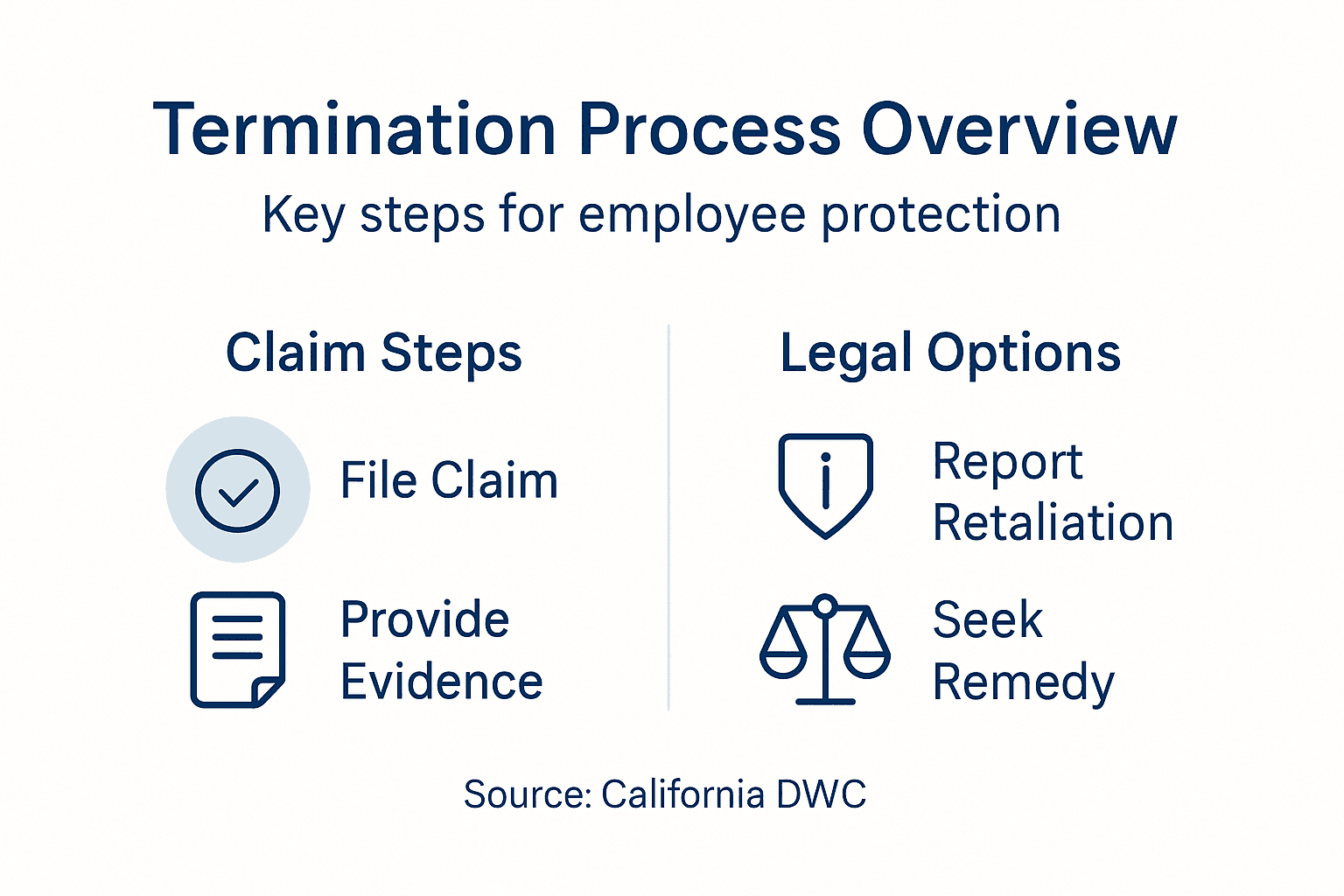
Employees must typically initiate their legal recourse by filing a formal complaint with the Equal Employment Opportunity Commission (EEOC) or relevant state labor department. The complaint should comprehensively detail the circumstances of the workers’ compensation claim, subsequent termination, and any evidence of discriminatory actions. Supporting documentation can include performance records, communication logs, medical documentation, witness statements, and any correspondence demonstrating the employer’s retaliatory behavior.
Legal remedies for wrongful termination can encompass multiple avenues of compensation and resolution. Potential outcomes include reinstatement to the previous position, back pay, compensation for lost wages and benefits, damages for emotional distress, and potential punitive damages in cases of extreme misconduct. Employees may also seek legal representation from attorneys specializing in workers’ compensation and employment law to navigate the complex legal landscape and maximize their potential recovery.
Pro tip: Collect and preserve all potential evidence immediately after experiencing potential wrongful termination, including emails, performance reviews, witness contact information, and detailed personal notes documenting the sequence of events.
Protect Your Rights After a Workers’ Compensation Claim
Facing termination or retaliation after filing a workers’ compensation claim is a deeply stressful and unsettling experience. Many employees encounter hostile work environments, unfair job reassignments, or sudden negative performance reviews as employers try to punish them for exercising their legal rights. If you believe you are a victim of wrongful termination or workplace retaliation, understanding your rights is the first step towards reclaiming your job security and dignity.
At Serendib Law Firm, we specialize in fighting retaliation and wrongful termination cases to ensure injured workers receive the protections they deserve under California law. Our experienced legal team provides personalized, dedicated advocacy and is prepared to guide you through every step of your claim. Don’t let employers undermine your hard-earned workers’ compensation benefits or force you out unjustly. Learn more about how we address these challenges by visiting our Retaliation Archives or explore cases from Santa Ana and Newport Beach.
Take action now to protect your employment rights and fight back against unlawful workplace discrimination. Contact Serendib Law Firm at https://www.serendiblaw.com/ for a free consultation and get the legal support you need to hold your employer accountable.
Frequently Asked Questions
What qualifies as wrongful termination after a workers’ compensation claim?
Wrongful termination occurs when an employer fires an employee in retaliation for filing a legitimate workers’ compensation claim. This may manifest as direct retaliation, constructive discharge, or violation of public policy or explicit employment contracts.
What protections do employees have under California law regarding workers’ compensation claims?
California law protects employees by prohibiting retaliation against those who file workers’ compensation claims. Employees have the right to medical treatment, disability benefits, and to return to their job without fear of discrimination or termination.
How can I recognize signs of workplace retaliation after filing a workers’ compensation claim?
Signs of workplace retaliation may include negative performance reviews without justification, unexpected job reassignment, reduced work hours, or a hostile work environment aimed at pressuring the employee to resign.
What steps should I take if I believe I was wrongfully terminated after a workers’ compensation claim?
If you believe you were wrongfully terminated, you should document all related incidents, file a formal complaint with the appropriate agency such as the Equal Employment Opportunity Commission (EEOC), and consider consulting with an attorney to explore your legal options.